Construction projects depend on strong and dependable foundations. Whether the project involves a high-rise building, bridge, industrial facility, residential development, or public infrastructure, the quality of foundation piles directly affects structural stability and long-term performance. A foundation system that performs as designed helps protect investments, maintain safety, and support the intended lifespan of a structure.
A Pile Integrity and Pile Dynamic Test plays a critical role in evaluating the condition and performance of foundation piles. These testing methods help engineers, contractors, and project owners verify that installed piles meet design expectations and construction standards. Through accurate testing and analysis, potential issues can be identified before they become costly structural problems.
As a DPWH-BRS accredited engineering and construction laboratory, Inch-On Materials Testing Laboratory provides professional testing services that support quality assurance and structural reliability. Following ASTM and AASHTO standards, the laboratory delivers dependable testing solutions for projects that demand accurate and trustworthy results.
Understanding the Role of Deep Foundations in Construction
Deep foundations are designed to transfer structural loads from buildings and infrastructure to stronger soil or rock layers located beneath the surface. These foundation systems are commonly used when near-surface soil conditions cannot adequately support structural loads.
Foundation piles are essential components of deep foundation systems. They are installed into the ground to provide support and stability for structures built on challenging soil conditions. Piles may be constructed from concrete, steel, timber, or composite materials depending on project requirements.
Projects such as commercial towers, residential developments, bridges, ports, industrial plants, and transportation facilities frequently rely on pile foundations. Because these piles remain hidden beneath the surface after installation, testing becomes necessary to verify their condition and performance.
A Pile Integrity and Pile Dynamic Test allows engineers to assess foundation quality without extensive excavation or disruption. These testing methods provide valuable information that supports informed engineering decisions throughout the construction process.
What Is a Pile Integrity and Pile Dynamic Test?
A Pile Integrity and Pile Dynamic Test consists of specialized evaluation procedures used to examine the condition and performance of foundation piles.
Pile Integrity Testing focuses on identifying structural defects, discontinuities, or irregularities within a pile. This method evaluates whether the pile maintains consistent quality from top to bottom and whether defects occurred during installation or construction.
Pile Dynamic Testing evaluates the pile’s response to impact forces. This testing method helps determine load-carrying capacity, driving performance, and overall structural behavior. Dynamic testing provides important information about how a pile performs under simulated loading conditions.
Together, a Pile Integrity and Pile Dynamic Test offers a comprehensive assessment of foundation quality. Engineers can use the data to verify construction quality, confirm design assumptions, and ensure that foundation systems meet project requirements.
Benefits of Conducting a Pile Integrity and Pile Dynamic Test
Early Detection of Construction Defects
One of the primary advantages of a Pile Integrity and Pile Dynamic Test is the ability to detect defects before they affect project performance.
Testing can identify issues such as:
- Cracks within the pile
- Necking or reductions in pile diameter
- Voids and honeycombing
- Material inconsistencies
- Construction defects
- Changes in pile cross-section
Early identification allows corrective action before construction progresses further, reducing potential risks and delays.
Verification of Structural Performance
A Pile Integrity and Pile Dynamic Test provides confidence that installed piles are performing according to design specifications. Engineers can confirm pile continuity, evaluate structural behavior, and assess whether foundation elements meet project requirements.
Reliable testing data supports sound engineering decisions and strengthens quality control programs.
Cost Savings Through Preventive Measures
Addressing foundation problems after construction can result in significant expenses. Repairs, redesigns, project delays, and operational disruptions often exceed the cost of preventive testing.
A Pile Integrity and Pile Dynamic Test helps project teams identify concerns early, minimizing costly future interventions.
Improved Project Confidence
Construction projects involve numerous stakeholders, including owners, developers, contractors, engineers, and regulatory agencies. Accurate testing results provide assurance that foundation systems are constructed properly and capable of supporting intended loads.
How Pile Integrity Testing Works
Pile Integrity Testing is a non-destructive testing method commonly used to assess foundation pile continuity and detect defects.
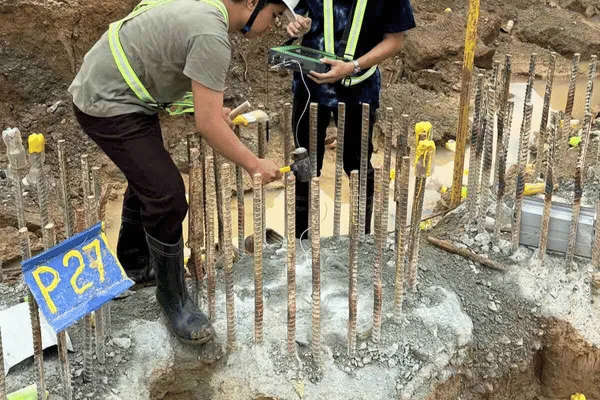
The process typically begins with preparation of the pile head. A small impact is applied to the pile using a handheld hammer or specialized impact device. Sensors placed on the pile record wave reflections generated by the impact.
As the stress wave travels through the pile, changes in material properties or geometry create reflections that return to the sensor. Engineers analyze these reflections to identify potential anomalies.
The testing procedure is relatively quick and efficient, making it suitable for projects with multiple piles requiring evaluation.
Benefits of Pile Integrity Testing include:
- Non-destructive assessment
- Rapid testing process
- Minimal disruption to construction activities
- Detection of hidden defects
- Cost-effective quality assurance
Pile Integrity Testing serves as an important component of a comprehensive Pile Integrity and Pile Dynamic Test program.
How Pile Dynamic Testing Works
Pile Dynamic Testing evaluates foundation pile performance under impact loading conditions.
During testing, sensors are attached to the pile near the top. A controlled hammer strike generates a force that travels through the pile. The sensors measure force and velocity data generated during the impact event.
Advanced software analyzes the collected information to estimate:
- Pile capacity
- Driving stresses
- Hammer performance
- Soil resistance
- Structural response
Compared to traditional static load testing, dynamic testing offers a faster and more economical solution for evaluating pile performance.
Pile Dynamic Testing is particularly valuable for large projects where numerous piles require verification. The data generated through a Pile Integrity and Pile Dynamic Test provides engineers with valuable insights into foundation behavior and load-carrying capability.
Common Projects That Require Pile Integrity and Pile Dynamic Test Services
Commercial Buildings
Office towers, shopping centers, hotels, and mixed-use developments often rely on deep foundation systems. A Pile Integrity and Pile Dynamic Test helps ensure foundation quality before structural construction advances.
Residential Developments
High-rise condominiums and residential communities frequently require pile foundations due to varying soil conditions. Testing helps verify that installed piles meet design expectations.
Bridges and Transportation Infrastructure
Bridge structures depend heavily on foundation performance. A Pile Integrity and Pile Dynamic Test supports quality assurance and helps ensure long-term structural stability.
Industrial Facilities
Manufacturing plants, warehouses, power facilities, and processing centers require dependable foundations capable of supporting heavy equipment and operational loads.
Government and Public Works Projects
Public infrastructure projects often require strict compliance with engineering standards and quality requirements. Foundation testing provides documented verification of construction quality.
Key Standards and Guidelines Followed During Testing
Reliable testing results depend on standardized procedures and recognized engineering practices.
Inch-On Materials Testing Laboratory follows ASTM and AASHTO testing standards when performing a Pile Integrity and Pile Dynamic Test. These standards establish testing procedures, equipment requirements, data interpretation methods, and quality assurance protocols.
Compliance with recognized standards offers several benefits:
- Consistent testing procedures
- Reliable and repeatable results
- Improved project documentation
- Regulatory compliance
- Enhanced confidence among stakeholders
Following internationally recognized standards helps ensure that testing results are accepted across a wide range of engineering and construction projects.
Why Accurate Foundation Testing Is Critical for Long-Term Structural Safety
Foundation systems support every component of a structure. When foundation performance is compromised, the consequences can be significant.
Accurate testing helps prevent structural failures by identifying potential issues before they affect building performance. Testing data allows engineers to evaluate foundation conditions and implement corrective measures when necessary.
A Pile Integrity and Pile Dynamic Test also supports regulatory compliance and project documentation requirements. Many projects require proof that foundation systems have been properly evaluated before proceeding to subsequent construction stages.
Long-term structural reliability depends on informed engineering decisions. Testing provides the information necessary to support those decisions while helping protect project investments.
Quality foundation testing contributes to safer buildings, improved durability, and greater confidence among owners, contractors, engineers, and regulatory agencies.
Why Choose Inch-On Materials Testing Laboratory for Pile Integrity and Pile Dynamic Test Services
Selecting the right testing partner is an important part of any construction project.
Inch-On Materials Testing Laboratory offers comprehensive testing services supported by professional expertise and recognized accreditation.
As a DPWH-BRS accredited engineering and construction laboratory established in 2018, Inch-On has developed a strong reputation for accuracy, reliability, and technical competence.
Advantages of working with Inch-On include:
- DPWH-BRS accreditation
- Independent testing services
- ASTM and AASHTO-compliant procedures
- Advanced testing equipment
- Professional engineering support
- On-site testing capabilities
- Accurate reporting and analysis
The laboratory performs both field and laboratory testing services designed to support quality assurance across various project types.
Through professional Pile Integrity and Pile Dynamic Test services, Inch-On helps clients verify foundation quality and maintain confidence throughout the construction process.
Best Practices Before Scheduling a Pile Integrity and Pile Dynamic Test
Project teams can improve testing efficiency and results by following several best practices.
Review project documentation before testing begins. Accurate design information helps engineers understand testing objectives and project requirements.
Coordinate testing schedules early to avoid delays and ensure equipment availability.
Prepare testing locations and provide safe access to foundation elements requiring evaluation.
Communicate project goals clearly with testing professionals. Understanding the purpose of the Pile Integrity and Pile Dynamic Test allows the testing team to develop the most appropriate evaluation approach.
Finally, work with qualified and accredited laboratories that follow recognized standards and maintain strict quality assurance procedures.
Final Thoughts
Strong foundations form the basis of safe and successful construction projects. A Pile Integrity and Pile Dynamic Test provides essential information about foundation quality, structural condition, and load-carrying performance.
Through non-destructive evaluation and advanced dynamic testing methods, engineers can identify defects, verify pile capacity, and support informed project decisions. These testing procedures contribute to improved quality control, reduced risks, and enhanced structural reliability.
Inch-On Materials Testing Laboratory delivers dependable testing solutions backed by DPWH-BRS accreditation, ASTM and AASHTO compliance, and a commitment to accuracy. By partnering with experienced testing professionals, project teams can confidently move forward knowing their foundations have been properly evaluated and verified.
Frequently Asked Questions
What is the difference between a Pile Integrity Test and a Pile Dynamic Test?
Pile Integrity Testing focuses on detecting structural defects and verifying pile continuity, while Pile Dynamic Testing evaluates pile capacity and performance under impact loading conditions. Together, they form a comprehensive Pile Integrity and Pile Dynamic Test program.
When should a Pile Integrity and Pile Dynamic Test be performed?
Testing is commonly conducted after pile installation and before major structural construction begins. The timing depends on project requirements and engineering specifications.
Is a Pile Integrity and Pile Dynamic Test destructive?
No. Both testing methods are considered non-destructive or minimally invasive procedures. They evaluate foundation performance without causing significant damage to the pile.
Can a Pile Integrity and Pile Dynamic Test detect hidden defects?
Yes. Testing can identify internal defects such as cracks, voids, necking, and other discontinuities that may not be visible from the surface.
How long does pile testing take?
The duration varies depending on the number of piles and project conditions. Many pile integrity tests can be completed quickly, while dynamic testing may require additional setup and analysis time.
Why is pile testing important for large construction projects?
Large projects depend on reliable foundation performance. A Pile Integrity and Pile Dynamic Test helps verify that piles meet design requirements and can safely support anticipated loads.
What standards are followed during pile testing?
Testing is typically performed according to recognized standards such as ASTM and AASHTO, ensuring consistency, accuracy, and compliance with industry requirements.
Why choose Inch-On Materials Testing Laboratory for foundation testing?
Inch-On Materials Testing Laboratory is a DPWH-BRS accredited engineering and construction laboratory that provides professional testing services, advanced equipment, ASTM and AASHTO-compliant procedures, and reliable results that support construction quality and structural safety.