Steel serves as a critical material for reinforced concrete structures, structural frameworks, bridges, industrial facilities, commercial buildings, and major infrastructure projects. Its ability to withstand applied forces can directly affect structural performance and long-term service life. Because visual inspection alone cannot establish every mechanical property, laboratory evaluation provides valuable data about steel behavior and strength.
Destructive steel testing Quezon City provides engineers, contractors, developers, fabricators, and project owners with measurable information about a steel specimen through controlled laboratory procedures. A prepared sample is subjected to carefully controlled loading until it reaches permanent deformation or failure. The resulting measurements can help determine properties such as yield strength, tensile strength, elongation, and other characteristics required by a project specification.
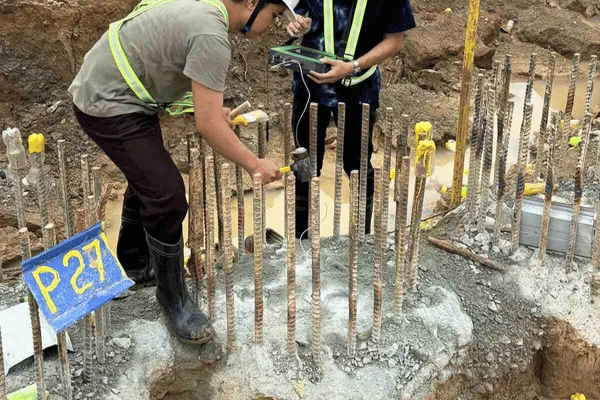
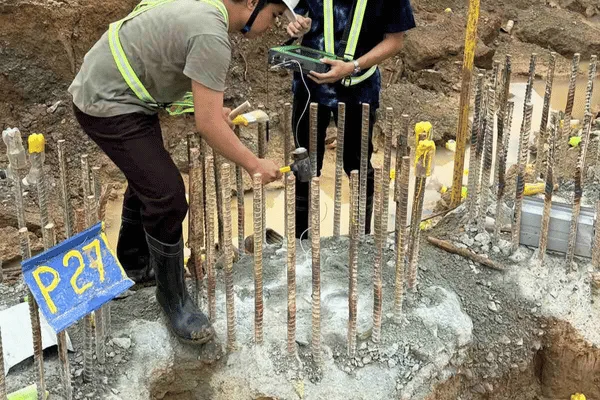
Inch-On Materials Testing Laboratory is a DPWH-BRS accredited Engineering and Construction Laboratory established during November 2018. The laboratory focuses on construction-material quality verification and also performs field testing for soil, concrete, and foundation piles using specialized equipment. Its laboratory and field services follow ASTM and AASHTO testing standards.
For projects requiring Destructive steel testing Quezon City, a professional laboratory can provide controlled procedures, technical measurements, and organized reports that support material-quality evaluation and engineering review.
What Is Destructive Steel Testing?
Destructive steel testing is a laboratory process that examines how a steel specimen responds when subjected to controlled force. Unlike visual inspection, this method provides quantitative information about mechanical performance.
A representative steel specimen is prepared according to the applicable test requirements. The sample is then positioned within a suitable testing machine. Controlled force is applied while the laboratory equipment records the material response.
Testing may continue until the specimen reaches a defined deformation point or fractures. Measurements gathered during this process can help establish important mechanical characteristics.
For Destructive steel testing Quezon City, the exact procedure depends on the steel type, specimen configuration, applicable standard, project specification, and requested test.
How Destructive Testing Works
A typical laboratory workflow may include:
- Receiving and identifying the steel sample
- Reviewing project specifications and requested test requirements
- Preparing the specimen according to the applicable procedure
- Positioning the specimen within the testing equipment
- Applying controlled mechanical force
- Recording load and deformation measurements
- Continuing the test until the required endpoint is reached
- Reviewing the resulting data
- Preparing a technical laboratory report
Proper identification and handling are important because test results need to correspond to the correct material sample and project documentation.
Why Steel Samples Are Tested Until Failure
A destructive test can reveal how steel behaves as applied force increases. Permanent deformation and fracture provide useful information about the specimen’s mechanical response.
Testing may help determine whether a sample demonstrates the strength and ductility characteristics required by an applicable specification. The resulting information can then support engineering evaluation, material acceptance, and quality-control documentation.
Why Steel Testing Matters for Construction Projects
Construction projects depend on materials that meet specified performance requirements. Steel may carry or reinforce significant structural loads, making material verification an important part of quality-control planning.
Destructive steel testing Quezon City can provide objective laboratory measurements that supplement supplier documentation, visual inspection, and other quality-control activities.
Steel testing can apply to materials such as:
- Reinforcing steel bars
- Structural steel
- Steel plates
- Fabricated steel components
- Construction reinforcement
- Selected steel products used for infrastructure projects
Testing requirements vary from one project to another. Engineers may specify particular mechanical properties, standards, specimen dimensions, or acceptance criteria.
Laboratory results can provide project teams with documented measurements that support material review before or during construction.
Key Properties Evaluated During Destructive Steel Testing
A major purpose of Destructive steel testing Quezon City is to measure mechanical properties that describe how steel behaves when subjected to force.
Yield Strength
Yield strength describes the stress level associated with the onset of significant permanent deformation. Engineers may use this value when assessing whether a steel product satisfies a specified material requirement.
A reliable laboratory measurement can provide useful information for structural-material evaluation.
Ultimate Tensile Strength
Ultimate tensile strength represents the maximum tensile stress reached by a specimen during a tensile test.
This measurement helps describe the material’s capacity under increasing tensile force. Project engineers can compare laboratory results with applicable material specifications.
Elongation
Elongation describes the amount of deformation experienced by the specimen before fracture, normally expressed as a percentage based on the applicable testing procedure.
This measurement can provide information about ductility and material behavior during tensile loading.
Tensile Behavior
A tensile test can demonstrate how a steel specimen responds as force increases. Laboratory equipment records measurements throughout the test, allowing the resulting data to be reviewed according to the selected testing procedure.
Such information can help engineers understand whether the material demonstrates the expected mechanical response.
Fracture Characteristics
A destructive tensile test may result in specimen fracture. The resulting fracture characteristics can offer additional information when reviewed alongside quantitative laboratory measurements.
Technical interpretation should always consider the applicable material standard, test method, specimen condition, and project requirements.
Destructive Steel Testing vs. Non-Destructive Testing
Destructive and non-destructive testing serve different purposes. Selecting a testing method depends on the material, project requirement, available sample, and information needed by the engineering team.
| Destructive Steel Testing | Non-Destructive Testing |
|---|---|
| Uses a specimen that may permanently deform or fracture | Designed to examine a component without destroying the tested item |
| Measures selected mechanical properties through controlled loading | Can examine defects, discontinuities, surface conditions, or other characteristics |
| Requires suitable specimen preparation | May allow inspection of installed components |
| Produces quantitative mechanical test data | Produces inspection or condition-related information based on the selected method |
| Often requires a representative sample | May be performed directly on an existing component |
Neither approach automatically replaces the other. A project may require one method, the other, or a combination depending on engineering requirements.
For Destructive steel testing Quezon City, project teams should identify the specific property they need to verify before selecting the appropriate laboratory test.
When Should Construction Projects Consider Destructive Steel Testing?
Steel testing can support several stages of construction-material quality control.
Before Material Acceptance
Testing may be requested before steel materials are accepted for project use. Laboratory measurements can provide additional evidence regarding material properties.
This can be especially useful when project specifications require independent verification.
During Quality-Control Checks
Construction quality-control programs may include material testing at selected stages. Steel specimens can be submitted for laboratory evaluation according to project requirements.
Regular documentation helps project teams maintain records of tested materials and corresponding results.
When Material Certification Requires Verification
Supplier certificates can provide important product information, but some projects may also require laboratory verification. Destructive testing can provide independent measurements for selected mechanical properties.
When Questions Arise About Steel Quality
Questions about material performance may arise due to documentation concerns, unusual material behavior, project requirements, or other quality-control observations.
A laboratory test can provide measurable information that engineers can review alongside other project evidence.
For Documentation and Engineering Review
Technical laboratory reports can become part of a project’s quality-control records. Engineers and contractors may use documented test results during material review and project discussions.
How Steel Testing Supports Construction Quality Control
A clear testing workflow helps maintain traceability from sample collection through final reporting.
Material Selection → Sample Collection → Specimen Preparation → Laboratory Testing → Data Analysis → Technical Report → Engineering Review
Material Selection
The project team identifies the steel product requiring verification and determines which properties need to be measured.
Sample Collection
A representative specimen is collected and properly identified. Sample documentation should correspond with the relevant project and material information.
Specimen Preparation
The laboratory prepares the sample according to the applicable testing procedure. Proper preparation is important because specimen dimensions and condition can affect test execution.
Laboratory Testing
The prepared specimen is positioned within suitable testing equipment. Controlled force is applied while measurements are recorded.
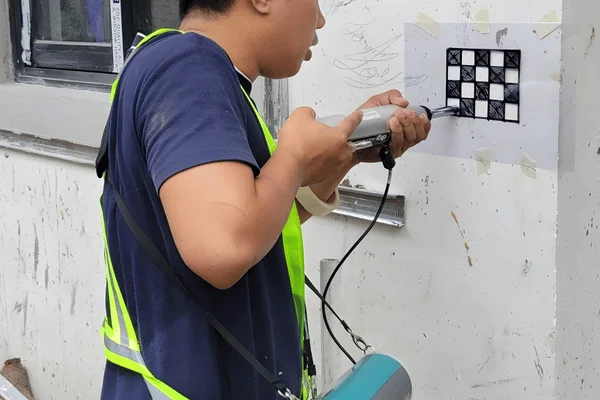
The supplied Inch-On reference imagery presents advanced testing as a laboratory service supported by specialized materials-testing equipment and technical personnel.
Data Analysis
Recorded measurements are reviewed according to the applicable test method and project requirements.
Technical Report
Results are organized into a technical report that can support material review and quality-control documentation.
Engineering Review
Engineers and project teams can evaluate laboratory results against the relevant specification or acceptance criteria.
Why Choose a Professional Steel Testing Laboratory?
Professional laboratory testing requires appropriate equipment, controlled procedures, trained personnel, and accurate documentation.
Calibrated Testing Equipment
Testing equipment needs appropriate calibration and maintenance so measurements can be collected according to established laboratory procedures.
A properly maintained testing system supports repeatable and dependable measurement.
Qualified Laboratory Procedures
Sample preparation, equipment setup, loading procedures, measurement recording, and reporting all contribute to test quality.
For Destructive steel testing Quezon City, project teams should provide the laboratory with clear information about the required material, test method, and project specification.
Technical Reporting
A useful laboratory report should present relevant test information clearly. Depending on the selected procedure, this may include specimen identification, test method, measurements, results, and other required technical details.
Clear documentation makes it easier for engineers and quality-control personnel to review laboratory findings.
Independent Verification
Independent laboratory testing can provide an additional source of technical information for construction projects. This can support material verification alongside supplier documentation and project inspection procedures.
Destructive Steel Testing Standards and Technical Requirements
Steel testing should follow the standard or project requirement applicable to the specific material and test.
ASTM standards provide recognized procedures for many construction-material testing applications. AASHTO standards are also widely used for transportation and infrastructure-related material testing.
Inch-On Materials Testing Laboratory states that its laboratory follows ASTM and AASHTO testing standards.
The correct procedure depends on factors such as:
- Steel type
- Product classification
- Specimen dimensions
- Required mechanical properties
- Project specification
- Applicable ASTM or other recognized standard
- Required reporting information
For this reason, project teams should identify the exact testing requirement before submitting a specimen for Destructive steel testing Quezon City.
Why Work With Inch-On Materials Testing Laboratory?
Selecting a laboratory involves more than locating a facility that can perform a test. Project teams should consider accreditation, testing capability, equipment, procedures, reporting, and experience with construction materials.
DPWH-BRS Accredited Laboratory
Inch-On Materials Testing Laboratory is identified within the supplied company information as a DPWH-BRS accredited Engineering and Construction Laboratory established during November 2018. Its services include construction-material testing and specialized field testing.
Laboratory and Field Testing Capabilities
Inch-On’s service information covers both laboratory and field testing. Laboratory testing focuses on controlled evaluation of construction materials, while field testing supports assessment of soil, concrete, and foundation-related conditions at project sites.
This broader testing capability can be useful for construction teams that require several types of material or site evaluation.
Advanced Testing Equipment
The supplied Inch-On service materials feature laboratory testing equipment designed for advanced materials evaluation. One reference image shows laboratory personnel handling a metal specimen with a testing machine, supporting the company’s advanced-testing service presentation.
ASTM and AASHTO Testing Approach
Following recognized testing standards helps establish a structured process for material evaluation. Inch-On’s stated use of ASTM and AASHTO standards provides a technical framework for its laboratory and construction-material testing services.
Technical Reports for Project Documentation
Laboratory reports can help project teams maintain organized records of material testing. These documents may support quality-control reviews, engineering assessments, and project documentation.
For contractors seeking Destructive steel testing Quezon City, having a laboratory capable of providing organized technical results can simplify communication among engineers, contractors, inspectors, and project owners.
What to Prepare Before Requesting Destructive Steel Testing
Preparing the necessary information before laboratory submission can help the testing process proceed smoothly.
Project teams should consider preparing:
- Steel samples or representative specimens
- Material identification
- Supplier information
- Heat or batch identification, where applicable
- Project specifications
- Required test parameters
- Applicable testing standard
- Requested report details
- Project reference information
- Desired testing schedule
The laboratory may request additional information depending on the selected test.
Providing accurate sample identification is particularly important. Each specimen should have sufficient documentation so laboratory results can be properly associated with the correct material.
Questions to Ask a Steel Testing Laboratory
Before requesting Destructive steel testing Quezon City, project teams may ask several practical questions.
What steel testing methods are available?
Ask which destructive tests the laboratory performs and which material types are covered.
Which ASTM standard applies to the required test?
The applicable standard depends on the material and requested property. A laboratory should be able to clarify the relevant procedure based on the project requirement.
What type of specimen should be submitted?
Specimen requirements can vary according to the selected test. Ask about sample dimensions, quantity, preparation, and identification.
Which mechanical properties will the report include?
Confirm whether the requested test provides the specific information required by the engineer or project specification.
How should samples be prepared?
Proper preparation can help prevent delays and ensure that the specimen is suitable for the selected testing procedure.
What information should accompany the samples?
Ask whether the laboratory requires project details, material certificates, supplier information, batch identification, or other documentation.
How long will laboratory testing take?
Testing schedules can vary based on the test type, specimen requirements, laboratory workload, and reporting requirements. Request a schedule before submitting time-sensitive project samples.
Can the laboratory provide technical reports?
A formal report can be useful for project documentation and engineering review.
Is the laboratory DPWH-BRS accredited?
For projects with specific accreditation requirements, confirm the laboratory’s current accreditation status and scope.
Can the laboratory assist with other construction-material testing?
A laboratory offering multiple services may help project teams coordinate related testing requirements. Inch-On’s supplied service information covers both field and laboratory testing capabilities.
Takeaway
Steel quality plays an important role across construction and infrastructure projects. Supplier documentation and visual inspection can provide useful information, but laboratory testing can offer direct mechanical measurements for selected material properties.
Destructive steel testing Quezon City provides a structured way to examine steel behavior through controlled laboratory loading. Depending on the selected procedure, testing can provide data related to yield strength, tensile strength, elongation, and other mechanical characteristics.
Proper sampling, specimen preparation, equipment, testing procedures, data recording, and technical reporting all contribute to a useful laboratory evaluation.
Inch-On Materials Testing Laboratory provides construction-material testing services backed by its stated DPWH-BRS accreditation, ASTM and AASHTO testing approach, laboratory capabilities, and field-testing services.
For contractors, engineers, developers, fabricators, and project owners who require Destructive steel testing Quezon City, working with a qualified materials-testing laboratory can provide documented technical information to support construction quality-control and engineering review.
Frequently Asked Questions About Destructive Steel Testing Quezon City
What is destructive steel testing?
Destructive steel testing is a laboratory process where a prepared steel specimen is subjected to controlled force until it reaches a defined deformation or failure condition. The resulting measurements can provide information about selected mechanical properties.
What does destructive steel testing measure?
Depending on the selected procedure, testing can evaluate properties such as yield strength, ultimate tensile strength, elongation, and tensile behavior.
Why is tensile testing important for steel?
Tensile testing shows how a steel specimen responds as tensile force increases. Measurements can help determine whether the material meets specified mechanical requirements.
Can reinforcing bars undergo destructive testing?
Yes, representative reinforcing-steel specimens may undergo destructive laboratory testing when required by project specifications or applicable material standards. The appropriate procedure depends on the steel product and testing requirement.
Does destructive testing destroy the original steel sample?
The tested specimen may permanently deform or fracture during the procedure. Proper sample selection is therefore important, especially when the tested material forms part of a larger construction supply.
Is destructive steel testing suitable for every construction project?
Testing requirements depend on the material, project specification, engineering needs, available samples, and applicable standards. Engineers or project quality-control personnel should identify the appropriate test before submission.
Where can I request destructive steel testing in Quezon City?
Construction teams searching for Destructive steel testing Quezon City can consider Inch-On Materials Testing Laboratory for construction-material testing requirements. The company identifies itself as a DPWH-BRS accredited Engineering and Construction Laboratory and states that its testing work follows ASTM and AASHTO standards.
Why should steel testing use recognized standards?
Recognized standards establish defined testing procedures, specimen requirements, measurements, and reporting practices. Following the applicable standard helps create consistent and technically documented test results.
Can steel testing be combined with other construction-material tests?
Project teams may require several forms of material and site testing. Inch-On provides both laboratory and field testing services covering construction materials and site-related evaluations.