Steel plays a major role across modern construction projects. Reinforcing bars, structural members, fabricated components, and other steel materials must meet project specifications before they become part of a building or infrastructure system. Reliable material testing gives engineers, contractors, developers, and quality-control teams measurable information about material performance.
Destructive steel testing Quezon City refers to controlled laboratory procedures that physically affect or break a steel specimen so selected mechanical properties can be measured. Depending on the selected procedure, testing can provide information such as tensile strength, yield behavior, elongation, ductility, and other relevant characteristics.
For construction teams, laboratory testing can support material verification, quality control, technical documentation, and engineering assessment. Each test must follow the applicable standard, project specification, specimen requirement, and laboratory procedure.
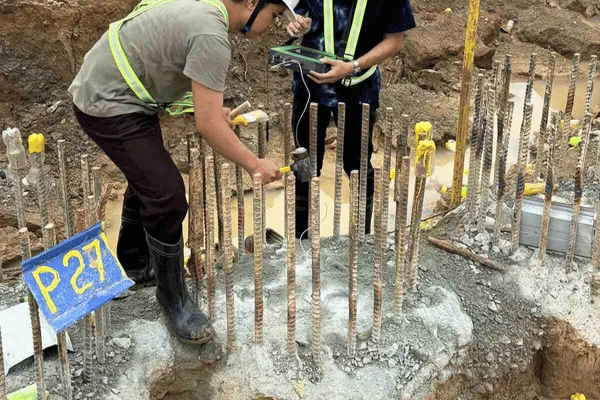
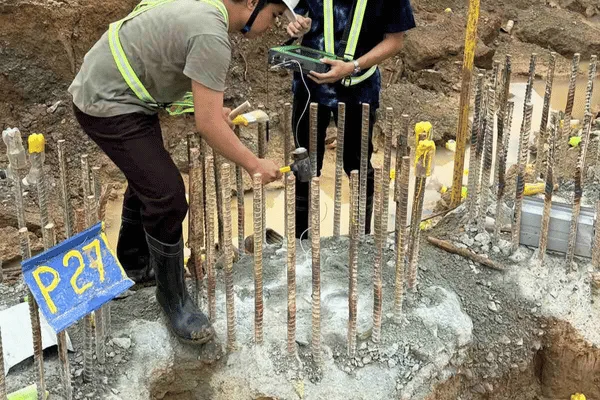
Inch-On Materials Testing Laboratory is an independent engineering and construction laboratory established in November 2018. The company is accredited by the Department of Public Works and Highways – Bureau of Research and Standards (DPWH-BRS) and performs testing work based on ASTM and AASHTO standards. Its documented services include laboratory evaluation of soil and construction materials, plus field testing of soil, concrete, and foundation piles.
For companies researching Destructive steel testing Quezon City, understanding the testing process and selecting a qualified laboratory are important steps toward responsible construction-material quality control.
What Is Destructive Steel Testing?
Destructive steel testing involves subjecting a prepared steel specimen to controlled physical forces until the test reaches a defined endpoint. The process may involve stretching, loading, bending, or otherwise stressing the specimen according to the selected test procedure.
Unlike visual inspection, destructive testing produces measurable data from the physical response of the sample. Once a specimen has undergone the complete test, it generally cannot return to its original service condition.
A Destructive steel testing Quezon City program should begin with a clear understanding of the project requirement. The laboratory and project team need to identify the steel type, specimen requirements, applicable testing standard, number of samples, and acceptance criteria before testing starts.
The exact procedure depends on the material and testing objective. A structural engineer, contractor, supplier, or quality-control professional should identify the appropriate test based on project specifications and applicable standards.
What Information Can Steel Testing Provide?
Different steel tests can produce different types of engineering data. A tensile test, for example, can provide information about how a steel specimen behaves when subjected to gradually increasing tensile force.
Potential measurements may include:
- Tensile strength
- Yield behavior
- Elongation
- Ductility
- Load response
- Deformation characteristics
- Failure characteristics
The applicable test method determines which measurements are required and how results should be calculated and reported.
For Destructive steel testing Quezon City, the laboratory should receive clear instructions regarding the required test and applicable standard. This helps ensure that the resulting data directly addresses the project’s quality-control requirements.
Test results should also be reviewed by qualified professionals who understand the project design, material specification, structural requirements, and applicable acceptance criteria.
Destructive Testing vs. Non-Destructive Testing
Destructive and non-destructive testing serve different purposes.
Destructive testing physically affects the specimen during the testing process. This approach can provide direct information about certain mechanical properties under controlled laboratory conditions.
Non-destructive testing aims to inspect or evaluate material without destroying the tested component. Depending on the selected method, non-destructive techniques may be useful for locating discontinuities, assessing conditions, or evaluating existing components.
A project may require one testing approach or several complementary methods. The correct choice depends on the project specification, material type, engineering objective, and condition of the component.
When researching Destructive steel testing Quezon City, project teams should avoid selecting a test simply because it is common. The appropriate method should match the technical question that needs to be answered.
Why Does Destructive Steel Testing Matter for Construction Projects?
Construction projects depend on material performance. Steel used for structural or reinforcement purposes must satisfy specified requirements before project teams can confidently incorporate test results into their quality-control records.
Material Quality Verification
Supplier documentation can provide useful information about a steel product, but independent laboratory testing may provide additional evidence about selected material properties.
A properly collected and identified sample can be tested under controlled conditions. The resulting data can then be compared with applicable project requirements.
This makes Destructive steel testing Quezon City useful for projects where material verification forms part of the quality-control process.
Construction Quality Control
Quality-control teams need reliable information when accepting construction materials. Testing can provide numerical results that support technical decisions rather than relying solely on visual observations.
Material testing may also help project personnel identify variations between samples, batches, suppliers, or material sources.
Technical Documentation
Laboratory reports can become part of project documentation. Depending on the test, a report may contain specimen identification, project information, testing procedure, measured values, observations, and other relevant technical details.
Clear documentation helps engineers and project managers maintain organized records for quality-control activities.
When Should Steel Be Tested?
The timing of steel testing depends on the project requirements and quality-control plan.
Before Material Acceptance
Testing may be requested before large quantities of steel are incorporated into a project. This can provide project personnel with additional material information before extensive construction work proceeds.
During Construction Quality Control
Selected samples may be tested as part of an ongoing quality-control program. Sampling frequency and test requirements should follow the applicable project specification.
When Material Certification Requires Verification
Mill certificates and supplier documentation can provide important product information. A project team may also request independent testing when verification is required by its quality-control procedures.
When Questions Arise About Existing Material
Existing steel may require evaluation when questions arise regarding its properties or suitability. Sampling decisions should be handled by qualified engineering professionals because removing material from an existing structure can have technical and safety implications.
For Destructive steel testing Quezon City, the laboratory should receive complete project information before a testing schedule is finalized.
Common Steps for Destructive Steel Testing
A professional testing workflow begins before the specimen reaches the testing machine.
Step 1: Review Project Requirements
The project team identifies:
- Steel type or grade
- Required test
- Applicable standard
- Sample quantity
- Specimen dimensions
- Acceptance requirements
- Reporting requirements
This information helps the laboratory determine the appropriate testing procedure.
Step 2: Sample Identification and Preparation
Each specimen should have clear identification. Relevant information may include project name, location, material source, batch or heat information, and sample reference.
Specimen preparation depends on the selected standard. Proper dimensions and preparation are important because incorrect preparation can affect test results.
Step 3: Laboratory Testing
The prepared specimen is placed into suitable testing equipment. Controlled force is applied according to the applicable procedure.
Measurements are recorded throughout the test. The laboratory may monitor load, deformation, elongation, and other parameters relevant to the selected test.
Step 4: Data Analysis
After testing, the recorded measurements are evaluated according to the applicable procedure.
The laboratory calculates or reports the required material properties and presents the relevant findings.
Step 5: Technical Reporting
The final report should clearly identify the specimen, test procedure, measured results, and relevant project information.
For Destructive steel testing Quezon City, clear reporting is particularly useful when results need to be reviewed by engineers, contractors, inspectors, or project quality-control personnel.
Why Testing Standards Matter
Standardized testing procedures help laboratories perform tests consistently. ASTM and AASHTO are among the recognized technical standards referenced by Inch-On for its testing activities.
A test standard generally defines important details such as specimen preparation, equipment requirements, loading procedures, measurements, calculations, and reporting.
The exact steel-testing standard should always be confirmed according to the steel product, selected test, project specification, and laboratory scope. A specific ASTM designation should not be assigned to a steel test unless it has been confirmed as applicable.
For Destructive steel testing Quezon City, asking the laboratory which standard applies to the requested test is a practical step before submitting specimens.
Why DPWH-BRS Accreditation Matters
Laboratory credentials are an important consideration when selecting a construction-material testing provider.
Inch-On Materials Testing Laboratory is documented as a DPWH-BRS accredited engineering and construction laboratory. The company was established in November 2018 and operates as an independent testing laboratory focused on soil and construction materials.
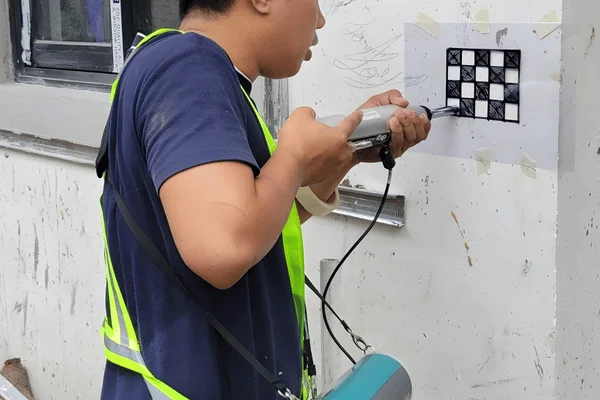
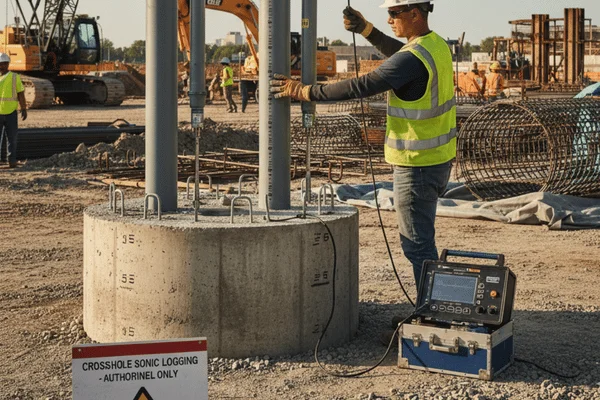
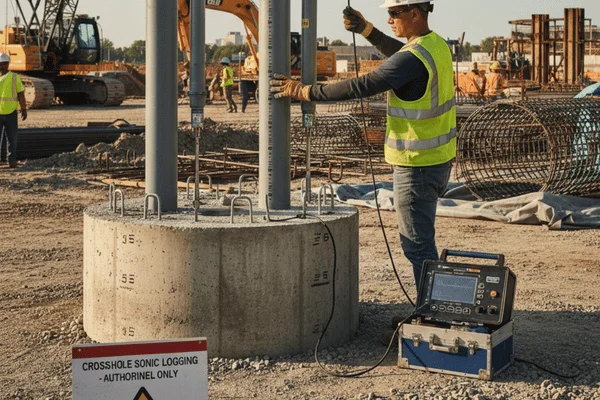
The laboratory also performs field testing involving soil, concrete, and foundation piles using specialized equipment. Its laboratory services cover soil and construction materials through standardized testing procedures.
For companies searching for Destructive steel testing Quezon City, accreditation status should be checked against the exact service being requested. A laboratory’s accreditation for one category of testing should not automatically be interpreted as accreditation for every possible material or procedure.
What Makes a Reliable Construction Testing Laboratory?
Selecting a testing laboratory requires more than looking at equipment alone.
Appropriate Equipment
Testing machines must be suitable for the material and test method. Equipment condition, calibration, maintenance, and proper operation can all affect testing quality.
Qualified Personnel
Laboratory personnel need appropriate technical knowledge for specimen preparation, equipment operation, measurement, calculations, and reporting.
Standardized Procedures
A reliable testing process should follow the applicable standard and project requirements.
Clear Documentation
A useful report should present technical information clearly enough for qualified project personnel to review and interpret.
Relevant Accreditation
Project teams should confirm whether the laboratory holds accreditation relevant to the specific requested service.
These considerations are particularly important when comparing Destructive steel testing Quezon City providers.
Why Consider Inch-On Materials Testing Laboratory?
Inch-On Materials Testing Laboratory provides engineering and construction laboratory services focused on material quality and technical evaluation.
The company was established in 2018 and is identified as a DPWH-BRS accredited laboratory. Its documented work covers soil and construction-material testing, along with field testing for soil, concrete, and foundation piles.
DPWH-BRS Accredited Laboratory
Inch-On’s DPWH-BRS accreditation provides an important credential for construction and engineering clients seeking laboratory services. Project teams should still confirm that the specific requested test falls within the laboratory’s current approved scope.
ASTM and AASHTO Testing Framework
The company states that its testing activities follow ASTM and AASHTO standards.
Using recognized testing procedures provides a structured basis for material evaluation and technical reporting.
Laboratory and Field Testing
Inch-On offers both laboratory and field-testing capabilities. Its documented field services cover soil, concrete, and foundation piles, while laboratory work focuses on soil and construction materials.
This broader technical capability can be useful for construction teams managing several testing requirements across a project.
Advanced Testing Capability
The supplied Inch-On visual materials present advanced testing as part of the company’s industrial service portfolio. One laboratory visual shows a technician working with a materials-testing machine and specimen.
Before requesting a specific steel test, clients should confirm current equipment availability, testing scope, specimen requirements, and applicable standards directly with Inch-On.
What Project Information Should You Prepare?
Clients can make the testing process easier by preparing relevant project information before contacting the laboratory.
Useful details may include:
- Project name
- Project location
- Steel type
- Steel grade
- Material source
- Supplier information
- Batch or heat identification
- Sample dimensions
- Number of specimens
- Requested test
- Project specification
- Applicable standard
- Required report information
- Target testing schedule
For Destructive steel testing Quezon City, providing accurate information at the inquiry stage helps the laboratory determine the appropriate procedure and specimen requirements.
Clients should also ask whether samples require specific preparation before submission.
How Destructive Steel Testing Supports Construction Decisions
Laboratory results can provide objective material data for engineering and quality-control activities.
Testing may support:
- Material verification
- Construction quality control
- Supplier documentation review
- Technical investigation
- Project records
- Engineering assessment
- Comparison against specified requirements
Laboratory testing should not be treated as a standalone guarantee of structural performance. Structural safety depends on many factors, including design, material selection, fabrication, installation, inspection, workmanship, loading, and maintenance.
For that reason, Destructive steel testing Quezon City should form part of a broader project quality-control program where appropriate.
How to Choose Destructive Steel Testing Services in Quezon City
Project teams can ask several practical questions before selecting a laboratory.
Is the Laboratory Accredited for the Requested Work?
Confirm the laboratory’s current accreditation and whether the requested test is covered by its approved scope.
What Testing Standard Will Be Used?
Ask which ASTM, AASHTO, Philippine, or project-specific procedure applies to the requested test.
What Sample Is Required?
Confirm specimen dimensions, quantity, preparation requirements, identification, and delivery instructions.
What Will the Report Include?
Ask whether the report will contain specimen information, testing procedure, measured values, calculations, observations, and other required documentation.
What Is the Expected Turnaround Time?
Testing schedules vary according to the procedure, specimen quantity, laboratory workload, and reporting requirements. Confirm the expected timeline before sending samples.
Can the Laboratory Handle Other Construction Tests?
A laboratory with broader testing capabilities may provide practical support when a project requires several types of construction-material evaluation.
Takeaway
Destructive steel testing Quezon City can provide valuable material data for construction quality control, technical assessment, and project documentation. Controlled laboratory testing allows selected steel properties to be measured under a defined procedure, giving engineers and project teams objective information for review.
A sound testing process starts with the correct test method and representative samples. Proper specimen identification, preparation, laboratory procedures, equipment, technical personnel, data analysis, and reporting all contribute to useful test results.
Inch-On Materials Testing Laboratory is a DPWH-BRS accredited engineering and construction laboratory established in 2018. Its documented capabilities include laboratory testing of soil and construction materials, field testing of soil, concrete, and foundation piles, and testing activities based on ASTM and AASHTO standards.
For a project requiring Destructive steel testing Quezon City, confirm the exact steel test, applicable standard, sample requirements, expected turnaround time, and current accreditation scope before submitting material for evaluation.
Contact Inch-On Materials Testing Laboratory to discuss your construction-material testing requirements and determine the appropriate laboratory procedure for your project.
Frequently Asked Questions About Destructive Steel Testing Quezon City
What is destructive steel testing?
Destructive steel testing is a controlled laboratory process where a steel specimen is physically loaded or stressed to measure selected material properties. The specimen is generally affected or damaged during the test.
Why is destructive steel testing performed?
Testing can provide measurable information about properties such as tensile strength, yield behavior, elongation, and ductility, depending on the selected procedure.
Does destructive testing damage the steel sample?
Yes. The test physically affects the specimen. After completing the test, the sample generally cannot be returned to its original service condition.
What steel properties can be measured?
The properties depend on the selected testing procedure. Potential measurements include tensile strength, yield behavior, elongation, ductility, deformation response, and failure characteristics.
What standards are used for steel testing?
The applicable standard depends on the material, test method, project requirement, and laboratory scope. Inch-On documents ASTM and AASHTO standards as part of its testing framework.
Clients should confirm the exact standard before testing.
How should steel samples be prepared?
Sample preparation depends on the selected test procedure. Dimensions, shape, quantity, identification, and preparation requirements should be confirmed with the laboratory before specimens are prepared.
Why choose a DPWH-BRS accredited laboratory?
DPWH-BRS accreditation provides an important credential when evaluating an engineering and construction laboratory. Clients should still confirm whether the requested test falls within the laboratory’s current approved accreditation scope.
Does Inch-On provide destructive steel testing?
The supplied Inch-On reference material documents laboratory testing for soil and construction materials, plus field testing for soil, concrete, and foundation piles. It does not specifically confirm a destructive steel-testing service or a particular steel-testing accreditation scope.
Clients searching for Destructive steel testing Quezon City should contact Inch-On directly to confirm current steel-testing availability, applicable standards, equipment, specimen requirements, and accreditation scope.