Understanding In-Place Density Soil Testing in the Philippines
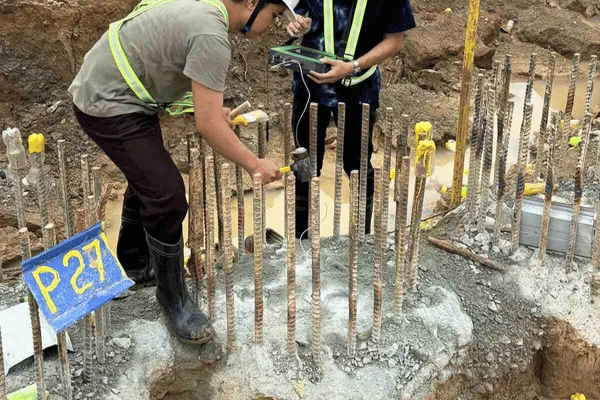
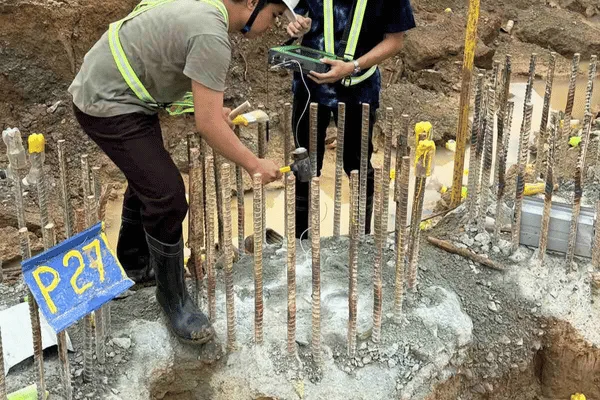
Construction projects depend on stable ground, and soil compaction plays a major role in creating a reliable foundation for buildings, roads, and other infrastructure. In-place density soil Philippines testing helps engineers and contractors evaluate how effectively soil has been compacted at a construction site. The test measures the density of soil in its existing or compacted condition and provides information that can be compared with established laboratory results. This comparison helps determine whether the prepared soil meets the project’s specified compaction requirements. Without appropriate testing, poorly compacted soil may remain undetected until settlement, uneven surfaces, or structural performance problems develop. Field density testing is therefore an important component of construction quality control and geotechnical engineering. By working with qualified testing professionals, project teams can make informed decisions about soil preparation before proceeding with additional construction activities.
Why In-Place Soil Density Testing Matters in Construction
Soil compaction reduces the air spaces between soil particles, helping the material achieve a denser and more stable condition. When soil is compacted appropriately, it can provide more consistent support for foundations, pavement layers, embankments, and other structures. In contrast, insufficient compaction can contribute to differential settlement, pavement deformation, cracking, and costly repair work. Excessive moisture or inadequate compaction equipment may prevent soil from reaching the required density. Field density testing allows construction teams to identify these problems while the affected soil layer is still accessible. It also provides documented measurements that engineers can use when evaluating whether earthwork meets project specifications. For projects in the Philippines, where rainfall, drainage conditions, and soil characteristics vary by location, reliable testing can support better construction planning and quality assurance.
Common Applications of In-Place Density Soil Philippines Testing
In-place density testing is used in several types of construction projects throughout the Philippines. For building foundations, it helps verify the compaction of prepared ground and engineered fill before subsequent construction work begins. Road construction projects use field density testing to evaluate compacted subgrade, selected embankment materials, and other earthwork layers. Residential subdivisions and commercial developments may require testing for building pads, parking areas, access roads, and backfilled sections. Industrial facilities also benefit from density testing when preparing ground beneath equipment foundations, loading areas, warehouses, and vehicle routes. Infrastructure projects may require field measurements for embankments, utility trenches, drainage installations, and other compacted earthworks. The required test locations, testing frequency, and acceptance criteria should always follow the approved construction documents and applicable technical standards.
Common Methods Used for In-Place Soil Density Testing
Several testing methods can be used to measure soil density in the field, and each has specific advantages and limitations. The appropriate method depends on the soil material, project specifications, available equipment, and applicable testing standards. Understanding the differences between these methods helps engineers select an approach that produces reliable and relevant results. A qualified laboratory or geotechnical professional can recommend a suitable procedure after reviewing the project requirements. Regardless of the method selected, correct equipment setup, careful measurements, and complete documentation are essential. Field measurements must also be interpreted using appropriate laboratory reference values when calculating relative compaction. The following methods are commonly associated with construction soil density testing.
Sand-Cone Method
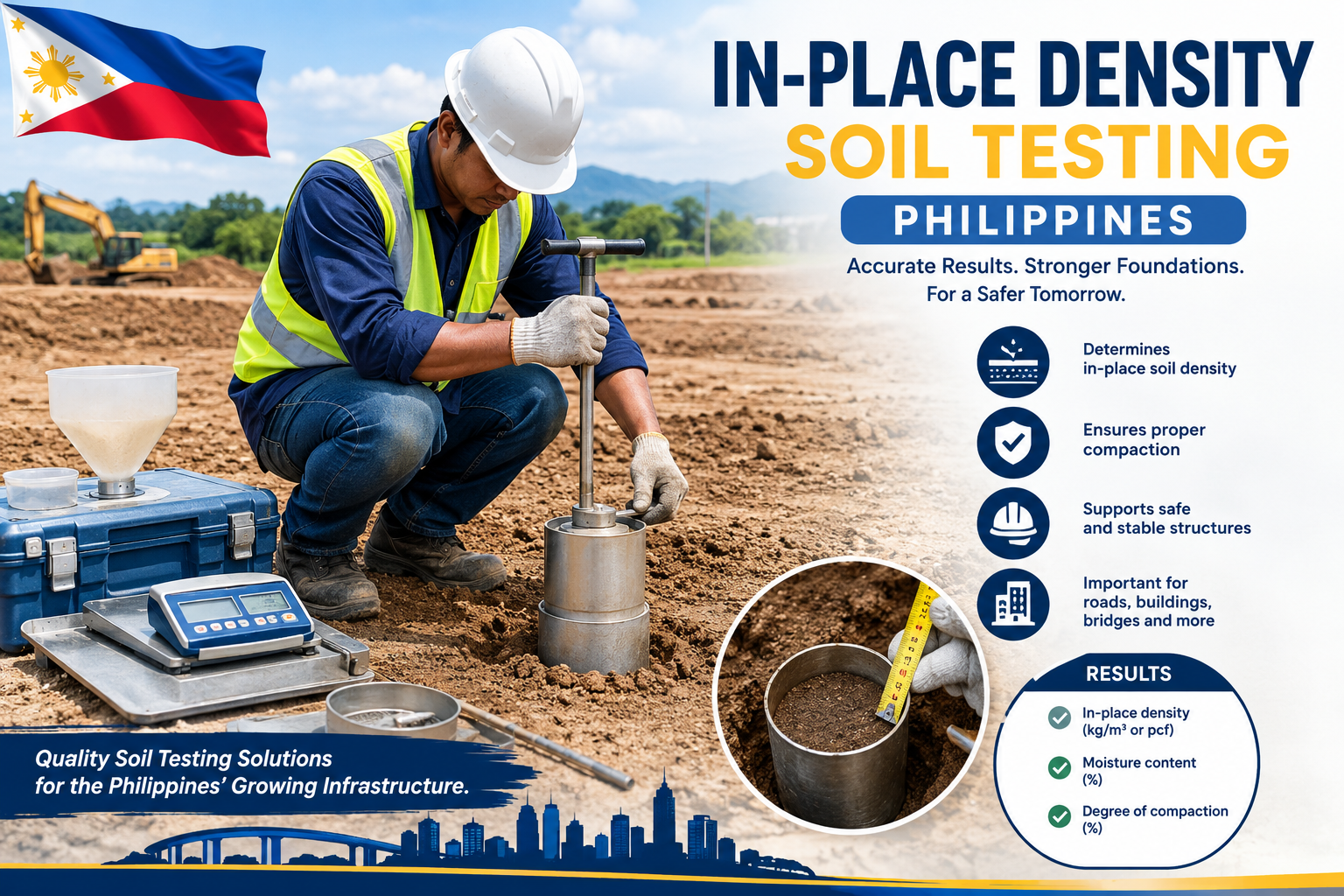
The sand-cone method determines the volume of a small hole excavated in compacted soil by filling it with calibrated sand. First, the technician collects and weighs the excavated soil from the designated test location. The volume of the hole is then determined using the calibrated sand apparatus and the prescribed procedure. By dividing the mass of the excavated soil by the measured hole volume, the technician calculates the field wet density. A moisture-content measurement is then used to determine dry density when required. ASTM D1556/D1556M is a recognized standard for the sand-cone method, subject to the applicable edition and project specifications. This method can be useful for many earthwork materials, although coarse particles, unstable test holes, or unsuitable soil conditions may affect its suitability.
Nuclear Density Gauge Method
The nuclear density gauge method uses specialized equipment to measure soil density and, depending on the instrument and procedure, moisture content. It can provide rapid field readings, making it useful for construction quality-control programs that require multiple measurements. The equipment must be operated by trained and authorized personnel following applicable radiation-safety requirements. Calibration, instrument condition, soil characteristics, and proper measurement procedures can influence the reliability of the results. The method may not be appropriate for every material or site condition, so project specifications should determine whether its use is acceptable. Contractors should confirm that the testing provider follows all applicable regulatory requirements and technical procedures. When used correctly, nuclear gauge measurements can help project teams evaluate compaction efficiently.
Rubber Balloon and Drive-Cylinder Methods
The rubber balloon method measures the volume of an excavated test hole using a calibrated flexible membrane device. The technician weighs the excavated soil and determines the hole volume to calculate field density. Its suitability depends on the stability and characteristics of the test hole, as well as the requirements of the selected procedure. The drive-cylinder method uses a suitable cylinder to collect a soil sample whose volume is known. The sample mass and cylinder volume are used to estimate density, provided the sample can be obtained without significant disturbance or compression. Drive-cylinder testing is generally more suitable for certain fine-grained soils than for materials containing large amounts of coarse particles. Engineers and testing technicians should select the appropriate method according to the soil conditions and the standards specified for the project.
Step-by-Step Process for Conducting an In-Place Density Soil Test
A reliable field density test begins with a clear understanding of the construction specifications and the required testing procedure. The technician first identifies the soil layer and test location according to the approved inspection or testing plan. The test area is prepared carefully to avoid disturbing the compacted material that needs to be evaluated. Depending on the selected method, the technician measures the volume of the test hole or obtains readings from approved testing equipment. The excavated soil or other required sample is weighed, and moisture content is determined using the prescribed procedure. Field dry density is then calculated and compared with the appropriate laboratory maximum dry density to assess relative compaction. Finally, the results are recorded in a report that identifies the test location, method, measurements, calculations, and compliance status.
When a result does not meet the required acceptance criteria, the affected area may need additional compaction, moisture adjustment, or further engineering assessment. The contractor should follow the engineer’s instructions and retest the material when required. Recording the original result and any subsequent corrective work helps maintain a clear quality-control history. Testing should be completed at the appropriate construction stage before the affected layer is covered by additional material. This approach allows problems to be identified while corrective work remains practical and accessible. Consistent coordination between site personnel, engineers, and testing technicians can also help minimize avoidable delays. A documented process supports reliable decisions throughout the earthwork phase.
Understanding Soil Density, Moisture Content, and Compaction Results
Understanding soil density results is essential for determining whether a construction site meets its specified compaction requirements. Wet density refers to the mass of soil, including its moisture, per unit volume, while dry density represents the mass of soil solids per unit volume. Maximum dry density is the highest dry density achieved under a particular laboratory compaction procedure. Optimum moisture content is the moisture level at which that procedure produces the maximum dry density. These values are commonly established through laboratory compaction testing, such as the Standard Proctor test under ASTM D698 or the Modified Proctor test under ASTM D1557. The appropriate laboratory method must match the requirements established in the construction documents. Field density measurements are then compared with the applicable laboratory reference to evaluate the percentage of relative compaction.
The relative compaction formula is expressed as follows:
Relative Compaction (%) = (Field Dry Density ÷ Maximum Dry Density) × 100
For example, suppose a field density test produces a dry density of 1.80 grams per cubic centimeter, while the laboratory maximum dry density is 1.90 grams per cubic centimeter. Dividing 1.80 by 1.90 and multiplying by 100 gives approximately 94.7% relative compaction. This result indicates the measured field dry density relative to the laboratory maximum, but it does not automatically determine whether the soil passes inspection. The acceptance requirement might be 90%, 95%, 98%, or another value, depending on the material, construction layer, and project specifications. Engineers must also consider whether the correct laboratory reference was used and whether the field test was performed properly. Accurate interpretation prevents contractors from making decisions based on an arbitrary compaction percentage.
Philippine Standards and Quality Control Requirements
Construction quality control in the Philippines requires attention to the technical standards and specifications applicable to each project. The Department of Public Works and Highways (DPWH) publishes specifications and reference materials that identify testing methods for construction materials and earthworks. For example, DPWH quality-testing references list field density testing using AASHTO T 191 and ASTM D1556M for specified applications, alongside laboratory compaction methods such as AASHTO T 99, AASHTO T 180, ASTM D698, and ASTM D1557. The appropriate method depends on the material and the requirements governing the work.
Factors That Affect In-Place Soil Density Test Results
Several conditions can influence the results of in-place density soil testing, even when the testing procedure is performed carefully. Soil classification is one important factor because clay, silt, sand, gravel, and mixed soils respond differently to compaction equipment and moisture. Excessive moisture may soften certain materials, while insufficient moisture can make some soils difficult to compact effectively. The type of compaction equipment also matters because vibratory rollers, smooth-drum rollers, pneumatic rollers, plate compactors, and rammers perform differently depending on the soil and work area. Lift thickness can affect compaction uniformity, particularly when equipment cannot transmit sufficient energy through the full depth of a soil layer. Weather conditions, especially heavy rainfall, can change moisture levels and create difficulties during site preparation and testing. Selecting representative test locations and using suitable procedures helps reduce the risk of misleading results.
Laboratory reference values must also be appropriate for the material being evaluated. If the soil changes significantly across the site, a single reference value may not accurately represent every material layer. Improper test-hole preparation, unstable soil, damaged equipment, or inaccurate measurements can introduce additional errors. The sand-cone method, for instance, may be unsuitable for materials that cannot maintain a stable test hole or that contain excessive coarse particles. These limitations should be assessed before the testing method is selected. Engineers and laboratory personnel should investigate unusual results instead of assuming that every failed test is caused by inadequate compaction. Understanding these factors helps construction teams identify the appropriate corrective action and improve the reliability of subsequent measurements.
How to Choose an In-Place Density Soil Testing Laboratory in the Philippines
Choosing a qualified testing laboratory is an important step for contractors who need dependable field density measurements. Begin by confirming whether the provider has experience with the type of construction project and soil material involved. Ask which field density methods are available and whether they meet the applicable project specifications. It is also important to verify the laboratory’s relevant accreditation or recognition, technical qualifications, and quality-control procedures. A suitable provider should be able to explain its testing process, equipment requirements, reporting practices, and limitations clearly. Contractors should also confirm whether the laboratory can arrange field testing at the project’s location and meet the required construction schedule. Comparing these factors provides a more meaningful basis for selecting a provider than considering price alone.
Before scheduling a test, share the project specifications, soil layer information, site location, and expected testing frequency with the laboratory. Ask whether laboratory compaction testing is also needed to establish the maximum dry density and optimum moisture content. Confirm how results will be reported and whether the report will identify the test location, field measurements, moisture content, calculated dry density, and relative compaction. Clear documentation helps engineers compare the results with the correct acceptance criteria. It also helps contractors identify areas that need additional work before subsequent construction activities begin. Maintaining communication between the site engineer, contractor, and testing provider can reduce scheduling problems. A well-organized testing arrangement supports consistent quality control throughout the earthwork phase.
Common Problems and Practical Ways to Improve Soil Compaction Results
Repeatedly failing a field density test can delay construction and increase labor and equipment costs. One common cause is inadequate moisture conditioning, which may prevent the soil from reaching the required density. Contractors can address this issue by adjusting moisture levels according to the approved procedure and the soil’s characteristics. Another problem occurs when soil is placed in lifts that are too thick for the available compaction equipment. Using suitable lift thicknesses allows compaction energy to reach the material more consistently. Selecting equipment that matches the soil type and working conditions can also improve results. Field density tests should be scheduled at the appropriate stages so that deficiencies are identified before the affected layer is covered.
When a test fails, the contractor should review the measurements, moisture conditions, material characteristics, and compaction process with the responsible engineer. The affected area may require additional passes with the compaction equipment, moisture adjustment, replacement of unsuitable material, or other corrective work. The correct response depends on the underlying cause and the project’s approved procedures. Retesting should take place after the necessary corrective action has been completed. Keeping records of failed tests, corrective measures, and subsequent results makes it easier to track recurring problems. Site teams should avoid covering an unaccepted layer unless the responsible engineer has authorized the next step. Consistent quality control helps prevent small earthwork deficiencies from becoming larger construction problems.
Benefits of Professional In-Place Density Soil Philippines Testing Services
Professional field density testing provides construction teams with measurable information about soil compaction at a project site. These measurements help engineers assess whether compacted soil meets the specified requirements before additional work proceeds. Reliable testing can also identify localized deficiencies that may otherwise remain hidden beneath later construction layers. Early detection gives contractors an opportunity to correct problems while the affected area is still accessible. Documented test results support inspection activities, construction records, and communication between project stakeholders. Working with qualified testing personnel can also help teams select appropriate methods and interpret the findings accurately. For projects throughout the Philippines, these services can support better coordination between earthwork operations and construction quality-assurance activities.
The value of testing extends beyond obtaining a passing result on a single measurement. Consistent field density testing helps project teams monitor the quality of compacted layers and recognize patterns that may require changes to site procedures. It can also help contractors evaluate whether their moisture-conditioning and compaction practices are producing the expected results. However, field density testing does not replace a complete geotechnical investigation, foundation design, drainage assessment, or other required engineering evaluations. A soil layer that meets a specified density requirement is not automatically suitable for every structural purpose. Engineers must consider soil strength, settlement potential, groundwater conditions, loading, and other relevant design factors. Combining appropriate field testing with sound engineering judgment supports more dependable construction decisions.
Frequently Asked Questions (FAQ)
1. What is an in-place density soil test?
An in-place density soil test measures the density of soil directly at a construction site. The results help engineers evaluate compaction by comparing the measured dry density with the appropriate laboratory maximum dry density. This comparison supports quality-control decisions for compacted fill, road subgrade, embankments, and other earthworks.
2. Why is in-place density soil testing important in the Philippines?
Field density testing helps construction teams verify that soil compaction meets the requirements established for a particular project. This is important for roads, buildings, commercial developments, and infrastructure projects across the Philippines. Local weather, drainage, and soil conditions can affect earthwork activities, making appropriate testing and quality control essential.
3. What is the difference between a field density test and a Proctor test?
A field density test measures the density of soil in its actual field condition. A Proctor test is a laboratory procedure that establishes the relationship between soil moisture content and dry density under a specified compaction effort. The laboratory result provides a reference for evaluating the percentage of compaction achieved in the field.
4. What percentage of soil compaction is required?
The required percentage depends on the project’s specifications, soil material, construction layer, and applicable standards. Some projects specify 95% relative compaction, but this value is not a universal requirement for every type of earthwork. Contractors should confirm the exact acceptance criteria with the project engineer before interpreting test results.
5. How long does an in-place density soil test take?
The duration depends on the testing method, site accessibility, number of test locations, soil conditions, and preparation requirements. A single field measurement may take less time than a testing program involving multiple locations and additional moisture-content procedures. Laboratory testing and report preparation may require additional time, so contractors should confirm the expected schedule with the testing provider.
6. Which method is best for in-place soil density testing?
The best method depends on the soil characteristics, project requirements, and available equipment. The sand-cone method is widely used for suitable compacted soils, while nuclear density gauges can provide rapid measurements when their use is permitted and appropriate. A qualified testing professional should determine the method that meets the project’s specifications.
7. When should a field density test be conducted?
Testing is generally performed after a soil layer has been compacted and before the next layer or construction activity proceeds. The testing schedule should follow the approved quality-control plan and the applicable inspection requirements. Additional testing may be needed if the original result fails to meet the specified criteria or if the material or site conditions change.
8. Where can contractors request in-place density soil testing in the Philippines?
Contractors can contact geotechnical engineering firms and construction materials testing laboratories that provide field density testing. Before engaging a provider, verify its technical capabilities, applicable qualifications, testing methods, service coverage, and reporting procedures. Sharing the project specifications in advance helps the laboratory determine the appropriate testing arrangements.
Takeaway
Reliable soil compaction is an essential part of preparing construction sites for buildings, roads, and infrastructure. In-place density soil Philippines testing gives engineers and contractors measurable evidence of how compacted soil performs against project-specific requirements. By understanding the available testing methods, moisture-density relationships, and applicable standards, construction teams can make better-informed decisions about earthwork quality. Selecting a qualified laboratory and following an organized testing plan can help identify deficiencies before subsequent construction activities begin. Proper corrective action, accurate documentation, and consistent communication also contribute to effective quality control. For dependable construction planning, coordinate with qualified geotechnical professionals to determine the field density testing methods and acceptance criteria appropriate for your project.