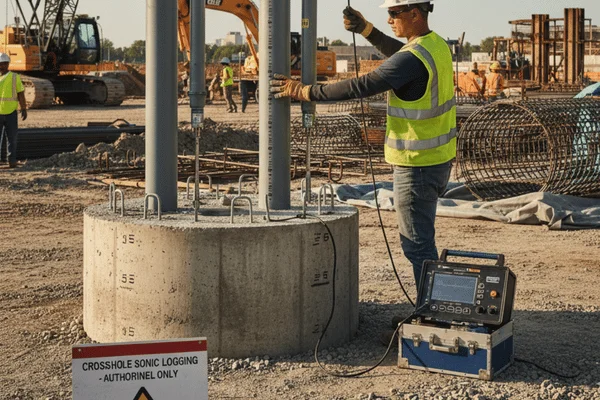
Construction projects depend on strong and reliable foundations. Whether supporting a high-rise building, bridge, industrial facility, or large infrastructure project, foundation piles play a major role in carrying structural loads safely into the ground. Any hidden defect within a pile can compromise performance, increase risks, and lead to costly repairs.
A Crosshole Sonic Logging Test is one of the most trusted methods for assessing the integrity of deep foundation piles. This advanced testing procedure allows engineers and project stakeholders to evaluate the quality of concrete within a foundation element and identify potential defects before they become serious structural concerns.
As a DPWH-BRS accredited laboratory, Inch-On Materials Testing Laboratory provides dependable Crosshole Sonic Logging Test services that help ensure foundation reliability, compliance, and long-term structural performance.
What Is a Crosshole Sonic Logging Test?
A Crosshole Sonic Logging Test is a non-destructive testing method used to assess the integrity of drilled shafts, bored piles, and other deep foundation elements. The test evaluates the quality and consistency of concrete within a pile by transmitting ultrasonic waves through access tubes embedded within the foundation during construction.
The primary goal of a Crosshole Sonic Logging Test is to detect internal anomalies that may not be visible from the surface. These anomalies may include voids, honeycombing, concrete segregation, soil contamination, or poorly consolidated concrete.
Because deep foundation elements are hidden underground after installation, visual inspection alone cannot confirm their condition. A Crosshole Sonic Logging Test provides engineers with valuable data that helps verify whether a pile meets design and quality requirements.
How a Crosshole Sonic Logging Test Works
The process begins during pile construction when access tubes are installed within the reinforcement cage before concrete placement. These tubes create pathways for ultrasonic testing equipment.
During the Crosshole Sonic Logging Test, a transmitter and receiver are lowered into separate access tubes. The transmitter emits ultrasonic pulses that travel through the concrete and are captured by the receiver.
The testing equipment records several important measurements, including:
- Signal travel time
- Signal strength
- Waveform characteristics
- Energy transmission
These measurements are collected at various depths throughout the pile. Specialized software then analyzes the results and identifies areas that may contain inconsistencies or defects.
A properly constructed pile typically produces consistent signal transmission and uniform travel times. Significant variations may indicate zones requiring further investigation.
Why Foundation Pile Integrity Matters
Deep foundations are designed to support substantial structural loads. Buildings, bridges, ports, power plants, and industrial facilities all depend on foundation systems that perform reliably for many years.
Even minor defects within a foundation pile can create challenges that affect structural performance. A Crosshole Sonic Logging Test helps identify these issues before construction progresses further.
Common foundation defects include:
- Voids within the concrete
- Honeycombing
- Segregated concrete
- Soil intrusion
- Necking or reduction in pile diameter
- Improper concrete consolidation
These defects can reduce load-carrying capacity and create uncertainties regarding long-term performance. Conducting a Crosshole Sonic Logging Test allows project teams to address concerns early and maintain construction quality standards.
Key Benefits of Conducting a Crosshole Sonic Logging Test
Early Detection of Internal Defects
One of the biggest advantages of a Crosshole Sonic Logging Test is the ability to identify hidden defects before project completion. Early detection reduces the likelihood of costly repairs and construction delays.
Project teams gain valuable information that supports corrective action if necessary, helping maintain project schedules and budgets.
Non-Destructive Evaluation
A Crosshole Sonic Logging Test does not damage the pile being evaluated. The testing process gathers critical information without affecting the structural integrity of the foundation element.
This allows engineers to verify pile quality while preserving the structure exactly as constructed.
Accurate Assessment of Concrete Quality
The data collected during a Crosshole Sonic Logging Test provides a detailed assessment of concrete consistency throughout the pile.
Rather than relying on assumptions, engineers can make informed decisions based on measurable testing results.
Enhanced Quality Assurance
Construction quality assurance programs benefit significantly from a Crosshole Sonic Logging Test. The test helps confirm that foundation elements meet project specifications and design expectations.
Reliable testing results contribute to better project documentation and increased confidence among owners, contractors, consultants, and regulatory agencies.
Projects That Commonly Require Crosshole Sonic Logging Test Services
Many construction projects depend on deep foundation systems and benefit from a Crosshole Sonic Logging Test.
High-Rise Buildings
Tall structures require foundations capable of supporting substantial vertical loads. A Crosshole Sonic Logging Test helps verify that foundation piles can perform as intended.
Bridges and Flyovers
Transportation infrastructure must maintain long-term safety and durability. A Crosshole Sonic Logging Test supports quality control efforts by identifying hidden defects before they become operational concerns.
Industrial Facilities
Factories, manufacturing plants, and processing facilities often involve heavy equipment and significant structural loads. Foundation reliability remains essential for safe operation.
Ports and Marine Structures
Marine construction projects frequently encounter challenging soil conditions. A Crosshole Sonic Logging Test helps ensure pile integrity despite difficult environmental factors.
Infrastructure Developments
Major infrastructure projects rely on dependable foundations to support public safety and long-term serviceability. A Crosshole Sonic Logging Test contributes valuable information that supports these objectives.
The Crosshole Sonic Logging Test Process
Pre-Test Preparation
Preparation begins during pile construction with the installation of access tubes. Proper tube placement is critical for obtaining accurate testing results.
Before testing begins, technicians verify that tubes are clean, unobstructed, and filled with water to facilitate ultrasonic wave transmission.
Data Collection
During the Crosshole Sonic Logging Test, transmitters and receivers are lowered into adjacent access tubes. Measurements are recorded at regular intervals throughout the pile length.
Multiple tube combinations are tested to provide comprehensive coverage of the foundation element.
Data Analysis
After data collection, engineers analyze travel times, signal strength, and waveform patterns.
Advanced software assists with identifying potential anomalies and generating detailed graphical representations of the pile condition.
Reporting
The final Crosshole Sonic Logging Test report summarizes findings, identifies any anomalies, and provides professional interpretations of the results.
These reports become valuable project records supporting quality assurance and engineering evaluation.
Understanding Common Crosshole Sonic Logging Test Results
Interpreting results correctly is essential for making informed construction decisions.
Indicators of Sound Concrete
A successful Crosshole Sonic Logging Test often shows:
- Consistent signal transmission
- Uniform travel times
- Strong signal energy
- Continuous wave patterns
These indicators generally suggest good concrete quality throughout the pile.
Indicators of Potential Defects
Certain patterns may indicate concerns requiring additional review.
These include:
- Increased travel times
- Reduced signal strength
- Signal interruptions
- Irregular waveform characteristics
Such findings may point to defects such as voids, inclusions, or poorly consolidated concrete.
Professional Interpretation Matters
Raw data alone cannot provide complete answers. Experienced testing professionals play a critical role in evaluating results and determining whether additional investigation is necessary.
This is why working with qualified laboratories like Inch-On Materials Testing Laboratory remains important for achieving accurate assessments.
Crosshole Sonic Logging Test vs Other Foundation Testing Methods
Crosshole Sonic Logging Test vs Low Strain Integrity Testing
Low Strain Integrity Testing evaluates pile continuity using stress waves generated at the pile head.
A Crosshole Sonic Logging Test provides more detailed information about internal concrete quality because ultrasonic signals travel directly through the pile body.
Crosshole Sonic Logging Test vs Static Load Testing
Static Load Testing evaluates the load-carrying performance of a pile.
A Crosshole Sonic Logging Test focuses on identifying internal defects and assessing concrete integrity rather than measuring load capacity.
Both testing methods serve different purposes and may be used together for comprehensive foundation evaluation.
Combining Multiple Testing Methods
Many projects combine a Crosshole Sonic Logging Test with other testing procedures to achieve a more complete understanding of foundation performance.
This approach helps engineers make informed decisions based on multiple sources of data.
Why Choose Inch-On Materials Testing Laboratory for Crosshole Sonic Logging Test Services
Choosing the right testing partner plays a major role in obtaining reliable results.
DPWH-BRS Accredited Laboratory
Inch-On Materials Testing Laboratory maintains accreditation from the Department of Public Works and Highways – Bureau of Research and Standards. This accreditation reflects a commitment to quality, accuracy, and professional testing practices.
Compliance with ASTM and AASHTO Standards
Every Crosshole Sonic Logging Test performed by Inch-On follows internationally recognized ASTM and AASHTO testing standards.
These standards help ensure consistency, reliability, and technical accuracy.
Specialized Equipment and Technical Expertise
Inch-On employs specialized testing equipment designed for precise field evaluations.
Its experienced professionals understand the complexities of foundation testing and provide dependable technical support throughout each project.
Comprehensive Construction Testing Solutions
Beyond Crosshole Sonic Logging Test services, Inch-On offers field testing and laboratory testing solutions for soil, concrete, and construction materials.
This broad range of services allows project teams to work with a single trusted laboratory partner.
Best Practices for Successful Crosshole Sonic Logging Test Implementation
Successful testing begins long before equipment arrives at the site.
Proper installation of access tubes is critical for accurate results. Tubes should be securely attached to reinforcement cages and protected during concrete placement.
Project teams should coordinate closely with testing professionals during planning and scheduling. Early communication helps prevent delays and ensures testing can be completed efficiently.
Conducting a Crosshole Sonic Logging Test at the appropriate stage of construction also contributes to reliable results. Timely testing allows project teams to address any identified concerns while corrective actions remain practical.
How Crosshole Sonic Logging Test Supports Safer and More Reliable Construction Projects
A Crosshole Sonic Logging Test serves as a valuable quality assurance tool for modern construction projects. By identifying hidden defects within foundation piles, the test helps reduce risks and improve confidence in structural performance.
Reliable foundation systems support safer buildings, bridges, industrial facilities, and infrastructure projects. Accurate testing data allows engineers and contractors to make informed decisions that contribute to project success.
Through professional testing services, compliance with ASTM and AASHTO standards, and DPWH-BRS accreditation, Inch-On Materials Testing Laboratory helps clients verify foundation integrity and maintain high construction quality standards.
Frequently Asked Questions About Crosshole Sonic Logging Test
What is the purpose of a Crosshole Sonic Logging Test?
A Crosshole Sonic Logging Test evaluates the internal condition of concrete foundation piles and helps identify defects such as voids, honeycombing, segregation, or soil intrusion.
When should a Crosshole Sonic Logging Test be performed?
A Crosshole Sonic Logging Test is typically performed after the concrete has gained sufficient strength and before significant structural loads are applied.
Is a Crosshole Sonic Logging Test a non-destructive testing method?
Yes. A Crosshole Sonic Logging Test is completely non-destructive and does not damage the pile being evaluated.
What types of foundations can be tested using a Crosshole Sonic Logging Test?
The test is commonly used for drilled shafts, bored piles, cast-in-place piles, and other deep foundation elements equipped with access tubes.
How long does a Crosshole Sonic Logging Test take?
The duration depends on pile size, depth, and the number of access tubes. Most individual pile tests can be completed within a few hours.
Why is pile integrity testing important?
Pile integrity testing helps verify foundation quality, identify hidden defects, support construction quality assurance programs, and reduce long-term structural risks.
Why choose Inch-On Materials Testing Laboratory for Crosshole Sonic Logging Test services?
Inch-On Materials Testing Laboratory offers DPWH-BRS accredited testing services, follows ASTM and AASHTO standards, employs specialized testing equipment, and provides experienced technical support for construction and infrastructure projects.