Working at height requires more than skill and experience; it also requires the right equipment for controlling fall hazards. Among the available fall protection devices, a self-retracting lanyard can provide workers with a practical combination of mobility and fall protection when used correctly. Unlike a conventional fixed-length lanyard, an SRL allows its lifeline to extend and retract according to the worker’s movement. This design can help reduce excess slack while allowing workers to perform tasks within an approved work area. For businesses looking for a self-retracting lanyard Philippines solution, understanding the equipment’s function, features, limitations, and proper application is essential. The right equipment selection can support a more organized approach to work-at-height safety. However, an SRL should always be considered as one component of a complete fall protection system rather than a substitute for proper planning, training, and workplace controls.
What Is a Self-Retracting Lanyard?
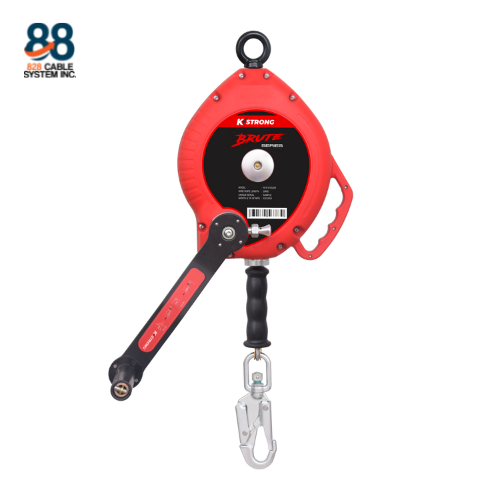
A self-retracting lanyard is a fall protection device that uses a lifeline stored inside a protective housing. The lifeline can extend as the worker moves away from the anchorage point and retract when the worker moves closer. This automatic adjustment helps maintain a controlled connection without requiring the worker to manually manage the line throughout the task. When a sudden fall occurs, the device is designed to respond to rapid lifeline movement by engaging an internal braking mechanism. Depending on the model, the equipment may also contain an energy-absorbing component intended to manage forces generated during fall arrest. SRLs are available in different sizes, lifeline materials, lengths, and configurations to suit various applications. Before purchasing or using one, workers and employers should understand the manufacturer’s specifications and determine whether the equipment matches the intended work environment.
Why SRLs Are Useful for Elevated Work
Workers performing elevated tasks often need to move around rather than remain in one fixed position. A conventional lanyard can provide fall protection, but its fixed length may create additional slack depending on how the worker moves. An SRL can automatically adjust its lifeline length, which may make movement more manageable within the equipment’s approved operating range. This feature can be particularly useful when workers need to inspect, maintain, install, or repair components at elevated locations. Construction sites, industrial facilities, commercial buildings, warehouses, and maintenance areas can all contain situations where controlled mobility is important. The device can also help reduce unnecessary line management during routine movement. Even so, the presence of an SRL does not remove the need to assess hazards, select a suitable anchorage, calculate fall clearance, and establish appropriate work procedures.
How an SRL Responds During a Fall
The internal mechanism of a self-retracting lanyard is designed to respond differently to normal worker movement and sudden acceleration. During ordinary movement, the lifeline extends and retracts as the worker changes position. When a rapid downward movement occurs, the device’s braking mechanism is designed to activate and stop or limit the lifeline’s movement according to the equipment’s design. This controlled braking action is a key feature that distinguishes an SRL from a simple length of connecting line. Some models also use energy absorption technology to help manage forces generated during a fall arrest event. The performance of the equipment depends on its design, anchorage configuration, and correct use. Workers should therefore never rely on assumptions about how an SRL will perform and should always follow the manufacturer’s instructions for the specific model.
Important Features to Consider Before Buying
Choosing a self-retracting lanyard requires careful consideration of several technical and practical features. One of the first factors is lifeline length because the worker needs adequate reach without exceeding the equipment’s intended working range. The lifeline material is also important because cable and webbing models may have different characteristics and applications. Housing durability should be considered when equipment will be used in demanding environments. Connectors should be compatible with the intended harness and anchorage arrangement, while locking mechanisms should operate properly during inspection. Swivel components may be beneficial in certain configurations because they can help manage twisting as workers move. Buyers should also review product documentation, applicable ratings, inspection requirements, environmental limitations, and manufacturer recommendations before purchasing an SRL.
Cable and Webbing Self-Retracting Lanyards
Two common lifeline materials used in SRLs are cable and synthetic webbing. Cable-based models generally use a wire rope lifeline housed inside a protective casing. They may be selected for applications where durability and resistance to certain environmental conditions are important. Webbing-based models use synthetic material and are often designed with a compact form that can be convenient for workers who need to move around an elevated work area. The choice between cable and webbing should depend on the work environment rather than personal preference alone. Factors such as abrasion, moisture, chemicals, sharp edges, temperature, and other workplace hazards may affect which design is appropriate. Workers should always verify whether a specific model is approved for the conditions where it will be used. Comparing these features carefully can help organizations select equipment that fits their actual fall protection requirements.
Where Self-Retracting Lanyards Can Be Used
An SRL may be used in various industries where workers are exposed to elevated work areas and the equipment is appropriate for the application. Construction crews may require fall protection when working on elevated structural components or platforms. Building maintenance personnel may use fall protection systems while inspecting or maintaining elevated building features. Industrial workers can encounter elevated platforms, machinery access points, and maintenance locations where controlled movement is necessary. Roofing work can also require carefully planned fall protection because workers may move across large surfaces while exposed to fall hazards. Infrastructure and telecommunications projects can involve additional challenges that require specialized equipment and procedures. In every situation, the selected SRL must be suitable for the work activity, anchorage arrangement, environmental conditions, and manufacturer’s stated limitations.
Selecting a Self-Retracting Lanyard Philippines Solution
Businesses searching for a self-retracting lanyard Philippines option should begin by identifying the exact work activities the equipment will support. Consider whether workers will operate from a fixed position or need to move throughout a designated area. The location and configuration of available anchor points should then be assessed because these factors can affect how the SRL is installed and used. Environmental exposure is another important consideration, particularly for outdoor projects where rain, heat, humidity, dust, and corrosive conditions may affect equipment. Employers should also consider lifeline length, equipment weight, connection type, and inspection requirements. Product documentation should be reviewed carefully before purchasing equipment for a particular application. When the correct configuration is unclear, consultation with a qualified safety professional can help identify suitable options.
Fall Clearance and Anchorage Considerations
Having an SRL does not automatically mean that a worker is protected from every type of fall hazard. Adequate fall clearance must be available beneath and around the worker so the fall protection system has sufficient space to function properly. Clearance requirements can depend on the SRL model, anchorage position, worker height, harness configuration, equipment deployment, and other factors. The presence of platforms, machinery, beams, floors, or other structures below the work area can create additional hazards. Anchorage location can also influence swing-fall exposure if the worker moves laterally away from the anchorage. These factors should be assessed before work begins rather than after an incident occurs. Manufacturer documentation and workplace fall protection procedures should be consulted to determine the requirements for the specific system being used.
Correct Connection and Equipment Use
Correct connection is fundamental to using a self-retracting lanyard safely. The SRL should be attached only to an appropriate anchorage or connection point specified for the equipment and system configuration. Workers should ensure that connectors are completely engaged and that locking mechanisms are functioning properly. The lifeline should be positioned according to the manufacturer’s instructions and should not be exposed to conditions that could damage it unless the equipment is specifically designed for those conditions. Workers should also avoid creating configurations that can interfere with the lifeline’s retraction or braking mechanism. Equipment should never be altered, dismantled, or modified without authorization from the manufacturer. Following established procedures can help workers use the equipment as intended and avoid preventable mistakes.
Inspecting an SRL Before Every Use
A pre-use inspection gives workers an opportunity to identify visible problems before relying on the equipment. The lifeline should be examined for cuts, fraying, broken fibers, corrosion, deformation, contamination, or other signs of damage. Hooks and connectors should be inspected to verify that their gates and locking mechanisms function properly. The housing should also be checked for cracks, severe impact damage, loose parts, or other abnormalities. Workers should confirm that the lifeline extends and retracts properly without unusual resistance or malfunction. Any manufacturer-approved inspection or function checks should be performed according to the provided instructions. If the equipment shows signs of damage or questionable performance, it should be removed from service and evaluated according to the appropriate procedure.
Maintaining and Storing Self-Retracting Lanyards
Proper storage and maintenance can help preserve the condition of fall protection equipment. An SRL should be kept in an environment that protects it from unnecessary moisture, excessive heat, chemicals, crushing, and mechanical damage. Equipment should be cleaned using methods approved by the manufacturer because inappropriate cleaning agents can damage certain materials or components. Workers should avoid throwing or dropping SRLs because impact can affect the housing and internal mechanism. Equipment should also be stored in a manner that prevents the lifeline from becoming unnecessarily contaminated or damaged. Repairs and component replacements should follow manufacturer-approved procedures. Maintaining inspection and service records can also help employers monitor equipment condition and manage fall protection assets more effectively.
Mistakes That Can Reduce SRL Effectiveness
Even high-quality equipment can be ineffective when it is selected or used incorrectly. Choosing an SRL solely because it is inexpensive can result in a product that does not match the actual work environment. Failing to inspect equipment before use can allow damaged components to remain in service. Using an unsuitable anchorage can also compromise the overall fall protection system. Workers may overlook fall clearance requirements because the SRL itself appears compact or has a short lifeline. Another common problem is combining components without confirming that they are compatible and approved for use together. Modifying an SRL or bypassing its safety mechanisms can create additional hazards and should never be treated as an acceptable shortcut.
Training Workers to Use SRLs Properly
Equipment selection is only one part of effective fall protection because workers also need appropriate knowledge and practical skills. Training should cover how to inspect the SRL, connect it correctly, identify suitable anchorage points, and recognize equipment limitations. Workers should understand how fall clearance affects their work area and why certain anchorage configurations may not be acceptable. Training can also address environmental hazards such as sharp edges, chemicals, extreme temperatures, and other conditions that may affect equipment. Employees should know what to do if equipment becomes damaged or is involved in a fall. Rescue planning should also be addressed because remaining suspended after a fall can create additional hazards. Regular training and reinforcement can help workers maintain safe practices when working with fall protection systems.
Philippine Workplace Factors to Consider
Businesses operating in the Philippines may encounter environmental conditions that require careful fall protection equipment selection. Outdoor work can expose equipment to intense heat, humidity, rain, dust, and other conditions that may affect materials over time. Construction and industrial sites can also involve abrasive surfaces, chemicals, structural edges, and heavy equipment. Employers should evaluate these conditions when selecting an SRL rather than assuming that all models are appropriate for every environment. Applicable Philippine occupational safety requirements should also be considered when establishing workplace procedures. Product documentation should provide clear information about approved applications, limitations, inspection, and maintenance. Taking these factors into account can help organizations build a more suitable and consistent approach to work-at-height safety.
Evaluating an SRL Supplier in the Philippines
The supplier’s reliability is an important consideration when purchasing fall protection equipment. Buyers should look for suppliers that can provide clear product specifications and manufacturer information. Documentation should be available to help users understand the equipment’s intended applications, limitations, inspection procedures, and maintenance requirements. A knowledgeable supplier should also be able to explain differences between SRL models and help customers identify products that match their work conditions. Warranty information and access to technical support can be valuable for organizations managing equipment over an extended period. Buyers should be cautious of products with unclear origins or incomplete documentation. When comparing a self-retracting lanyard Philippines supplier, product suitability and technical reliability should carry more weight than price alone.
SRL vs. Conventional Shock-Absorbing Lanyard
A conventional shock-absorbing lanyard and an SRL can both be used as components of fall protection systems, but their designs differ. A conventional lanyard generally maintains a fixed or selected length while the worker performs the task. An SRL automatically adjusts the length of its lifeline as the worker moves. This can provide greater mobility within an approved working area and can help reduce excess slack. However, the two systems have different operating characteristics and must be evaluated based on the task and anchorage arrangement. Both require appropriate equipment inspection, training, and consideration of fall clearance. Selecting one over the other should be based on the specific work activity and manufacturer’s requirements rather than a general assumption that one type is universally superior.
Frequently Asked Questions About Self-Retracting Lanyards
What is the main purpose of a self-retracting lanyard?
The main purpose of an SRL is to provide a connecting component within a personal fall protection system while allowing controlled worker movement. Its lifeline extends and retracts automatically as the worker changes position. The device is designed to respond to sudden lifeline acceleration associated with a fall. Its effectiveness depends on proper anchorage, correct configuration, inspection, and use. It should always be selected according to the intended application.
Is an SRL better than a regular lanyard?
An SRL is not automatically better than every conventional lanyard. Its automatic retraction can offer advantages when workers need controlled mobility within an approved area. A traditional lanyard may be more appropriate for certain fixed-position tasks. The choice should depend on the work environment, anchorage arrangement, fall clearance, and equipment specifications. A qualified safety professional can help determine the appropriate system when the application is complex.
How long does an SRL last?
The service life of an SRL depends on the manufacturer, usage conditions, inspection results, environmental exposure, and equipment condition. There is no single lifespan that applies to every product. Equipment should be inspected regularly and maintained according to manufacturer instructions. Damage or a fall event may require removal from service before the expected service period. Always follow the manufacturer’s service-life and inspection guidance.
Can an SRL be used for every type of work at height?
No. SRLs have specific applications and limitations. Some models may be designed for certain configurations while others may have restrictions related to anchorage, edges, environmental conditions, or installation. Workers should review product documentation before using an SRL for a particular task. The complete fall protection system should be assessed rather than focusing on the SRL alone.
Can an SRL be used near a leading edge?
Only SRLs specifically designed and approved for applicable leading-edge conditions should be considered for such work. Leading-edge applications can create additional forces and hazards that standard equipment may not be designed to handle. The manufacturer’s specifications should be reviewed carefully before use. Anchorage position and fall clearance should also be evaluated. When uncertain, the application should be reviewed by a qualified safety professional.
What happens if an SRL arrests a fall?
An SRL that has arrested a fall should generally be removed from service until it has been evaluated according to the manufacturer’s procedures. Internal components can experience forces that may not be visible through a basic inspection. Workers should not automatically return the equipment to use simply because it appears undamaged. Manufacturer or authorized service procedures should determine whether the device can be returned to service. Employers should also review the incident and reassess the fall protection system.
What should I check before buying a self-retracting lanyard Philippines product?
Buyers should evaluate lifeline length, material, connector configuration, intended application, environmental limitations, fall clearance requirements, and manufacturer documentation. Product authenticity and technical support should also be considered. The equipment should be compatible with the harness, anchorage, and other components of the planned fall protection system. Buyers should avoid choosing a product solely because of its price. Selecting an SRL based on the actual work environment can provide a more appropriate solution.
Takeaway
A self-retracting lanyard can provide valuable mobility and controlled connection for workers performing approved tasks at height. Its automatic lifeline mechanism distinguishes it from conventional fixed-length lanyards and can make certain work activities more manageable. However, equipment selection should always begin with a clear understanding of the workplace hazards and the intended application. Anchorage, fall clearance, environmental exposure, equipment compatibility, inspection, maintenance, and training all need to be considered together. Organizations searching for a self-retracting lanyard Philippines solution should prioritize reliable products supported by clear manufacturer information and appropriate technical guidance. Workers should also receive practical training so they understand how to inspect, connect, and use the equipment properly. With careful planning and responsible equipment management, an SRL can become a useful component of a comprehensive fall protection approach for work-at-height activities.