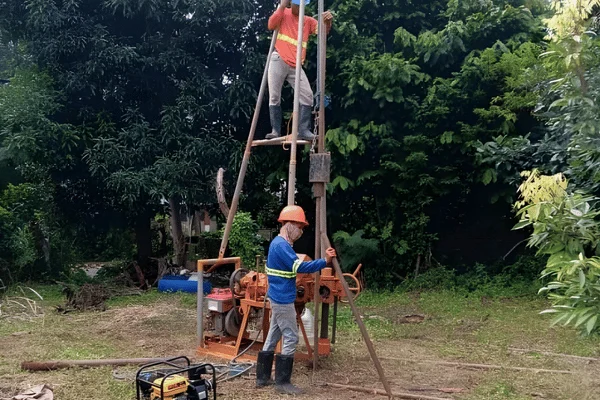

Strong structures depend on stable ground. Before concrete is poured, steel is placed, or walls are raised, project teams need reliable facts about the soil that will carry every load. Soil Testing gives engineers, contractors, developers, and property owners measurable data about soil strength, composition, moisture response, particle distribution, and settlement potential.
A site may look firm at surface level yet contain soft clay, loose fill, poorly graded material, or water-sensitive layers below. Such conditions can affect footing performance, pavement support, drainage, and long-term structural stability. Soil Testing helps reveal those risks early, allowing design teams to choose suitable foundation systems and site preparation methods.
Inch-On Materials Laboratory provides Soil Testing services guided by recognized ASTM procedures, calibrated equipment, careful sample handling, and clear reporting. Project teams receive practical laboratory data that supports design review, quality control, and construction planning.
What Is Soil Testing?
Soil Testing refers to a group of field and laboratory procedures used to measure physical and engineering properties of soil. These procedures help classify soil, assess strength, review moisture behavior, determine particle sizes, and identify conditions that may affect construction work.
Visual inspection alone cannot provide enough detail for foundation design. Color, texture, and surface firmness may offer clues, but technical decisions require measured values. Soil Testing provides those values through controlled procedures that produce repeatable and documented results.
Common Soil Testing goals include:
- Classifying soil as gravel, sand, silt, clay, or a mixture
- Measuring resistance and density
- Checking liquid limit, plastic limit, and plasticity index
- Reviewing particle-size distribution
- Assessing moisture sensitivity
- Supporting bearing-capacity evaluation
- Supporting settlement assessment
- Checking suitability for fill, subgrade, or foundation support
Each project may require a different group of tests. Building size, expected structural loads, site history, ground conditions, and project specifications all affect the final test program.
Why Soil Testing Matters for Construction
Soil carries the weight of a structure and transfers that load across the ground. Weak, compressible, loose, or highly plastic soil may not provide dependable support without corrective work. Soil Testing helps project teams identify such conditions before major construction activity begins.
Reliable Soil Testing can support better decisions about footing dimensions, excavation depth, compaction targets, replacement material, drainage work, or deeper foundation options. Early data may also reduce design changes after construction has already started.
Poor ground information may contribute to:
- Uneven settlement
- Wall and slab cracking
- Tilting or movement
- Pavement deformation
- Drainage problems
- Foundation distress
- Costly corrective work
- Schedule delays
- Disputes over material quality
Soil Testing does not remove every project risk, but it gives qualified professionals a stronger factual basis for design and construction decisions. That data can help reduce uncertainty and support safer project delivery.
Key Soil Properties Evaluated Through Soil Testing
Soil behavior depends on several connected properties. Soil Testing measures these properties so project teams can compare site conditions with design requirements.
Soil Strength
Soil strength affects how much load the ground can support before excessive movement or failure occurs. Loose sand, soft clay, or uncontrolled fill may provide weaker support than dense granular soil or properly compacted material.
Soil Testing data helps engineers assess whether existing ground may support proposed loads or whether ground improvement, replacement, compaction, or deeper foundations may be needed.
Particle-Size Distribution
Soil contains different proportions of gravel, sand, silt, and clay. Particle-size distribution affects drainage, compaction, permeability, and stability.
Well-graded soil contains a broad range of particle sizes that may pack more efficiently. Poorly graded material may contain mostly similar particle sizes, which can affect density and performance. Soil Testing helps classify these materials through sieve and sedimentation procedures.
Plasticity
Plasticity describes how fine-grained soil changes shape or consistency as moisture content changes. Clay-rich soil may become soft when wet and hard when dry. Some soil may also shrink or expand as water content rises or falls.
Atterberg limits provide useful measurements for this behavior. Soil Testing can determine liquid limit, plastic limit, and plasticity index, giving engineers data about workability and moisture sensitivity.
Moisture Response
Water can reduce soil strength, affect compaction, and increase settlement risk. Excess moisture may also make excavation difficult or weaken subgrade performance.
Soil Testing can help project teams understand how soil responds to moisture and whether drainage controls, drying, replacement, or stabilization may be needed.
Settlement Potential
Settlement occurs as soil compresses under load. Some settlement may be expected, but excessive or uneven movement can damage structural elements.
Soil Testing supports settlement assessment by providing data about density, consistency, composition, and compressibility. Qualified engineers can combine laboratory results with site conditions and structural loads to estimate likely behavior.
Compaction Characteristics
Compaction increases soil density by reducing air voids. Properly compacted soil generally provides better support for slabs, roads, embankments, and foundations.
Soil Testing helps verify whether selected material can meet project compaction requirements and whether field work has achieved the required density.
ASTM Soil Testing Methods
Recognized test procedures help create consistent results across projects. Inch-On Materials Laboratory performs Soil Testing based on applicable ASTM standards and project requirements.
ASTM D1586 Standard Penetration Test
ASTM D1586 covers the Standard Penetration Test, commonly called SPT. This field procedure measures resistance as a split-barrel sampler is driven through soil at selected depths.
The recorded blow count helps engineers assess relative density for granular soil and consistency for cohesive soil. SPT data also supports subsurface profiling, bearing-capacity review, and settlement analysis.
Soil Testing through SPT can help identify changes between soil layers, loose zones, soft deposits, and denser material. Results should be reviewed together with borehole records, sample descriptions, and other geotechnical information.
ASTM D4318 Atterberg Limits
ASTM D4318 covers liquid limit, plastic limit, and plasticity index for fine-grained soil.
The liquid limit marks the moisture level where soil changes from plastic behavior toward a more fluid state. The plastic limit marks the moisture level where soil begins to crumble rather than deform. Plasticity index represents the moisture range where soil remains plastic.
These values help classify clay and silt while showing possible moisture sensitivity. Soil Testing through Atterberg limits can support decisions about subgrade preparation, earthwork, fill suitability, and foundation planning.
ASTM D422 Particle-Size Analysis
ASTM D422 has historically covered particle-size analysis for soil. Project specifications may refer to this method when requesting gradation data.
Particle-size analysis separates soil fractions through sieving and sedimentation. Coarser particles are measured through sieves, while finer particles may require hydrometer-based procedures.
This Soil Testing method helps determine how much gravel, sand, silt, and clay a sample contains. Results support soil classification and help project teams review drainage, compaction, permeability, and material suitability.
How Soil Testing Supports Foundation Planning
Foundation design should reflect actual ground conditions rather than assumptions. Soil Testing gives structural and geotechnical professionals data that can guide footing selection, depth, dimensions, and allowable load decisions.
Shallow foundations may work where near-surface soil offers suitable strength and manageable settlement. Deeper foundations may be considered where weak layers extend below expected footing depth or where structural loads are high.
Soil Testing may also point toward corrective measures such as:
- Removal and replacement of unsuitable soil
- Controlled compaction
- Soil stabilization
- Drainage correction
- Use of engineered fill
- Wider or deeper footings
- Raft or mat foundations
- Pile-supported systems
Final foundation decisions should always come from qualified professionals who can review Soil Testing results beside structural plans, site conditions, groundwater information, and project requirements.
Common Ground Conditions Revealed by Soil Testing
Soil Testing may reveal several conditions that are not obvious during a surface walk-through.
Loose or Uncontrolled Fill
Fill placed without proper compaction records may settle after construction. Soil Testing can help assess density, composition, and consistency.
Soft Clay
Soft clay may compress under load and cause settlement. Plasticity and moisture data can help show how that material may behave.
Highly Plastic Soil
Highly plastic soil may change volume as moisture conditions change. Such movement can place stress on slabs, walls, pavements, and shallow foundations.
Poorly Graded Material
Material with limited particle-size variation may compact differently from well-graded soil. Soil Testing helps confirm gradation and suitability.
Excess Moisture
Wet soil may lose strength and become difficult to compact. Moisture-related findings can support drainage or drying decisions.
Organic or Unsuitable Material
Topsoil, roots, debris, and organic matter may not provide stable structural support. Testing and visual classification can help identify unsuitable material before placement or foundation work.
Uneven Soil Layers
A site may contain dense soil at one location and weak soil nearby. Such variation can cause uneven settlement unless design and site preparation account for it.
The Soil Testing Process
A reliable Soil Testing program follows clear steps from project review through final reporting.
Project Review
The laboratory reviews project requirements, site details, sample types, expected tests, and applicable standards. This stage helps match each test with the project’s design or quality-control needs.
Sample Collection
Representative sampling is critical. Samples should reflect actual soil conditions at selected locations and depths. Poor sampling can reduce the value of laboratory results.
Sample Handling
Samples receive labels and records that identify source, depth, date, and test requirements. Proper handling helps protect moisture condition and prevent contamination.
Laboratory Preparation
Laboratory staff prepare samples according to required methods. Preparation may include drying, breaking clods, weighing, sieving, or conditioning material for plasticity tests.
Test Execution
Qualified personnel conduct Soil Testing through controlled procedures and calibrated equipment. Measurements and observations are recorded throughout each test.
Data Review
Results are checked for consistency, calculations are verified, and report details are organized for practical review.
Report Preparation
A Soil Testing report may include sample identification, test standards, classifications, particle-size results, Atterberg limits, moisture data, observations, and supporting tables.
How to Read a Soil Testing Report
A Soil Testing report provides technical data rather than a simple pass-or-fail statement. Readers should compare results with project specifications and seek professional interpretation where needed.
Common report sections may cover:
- Sample source and identification
- Test method
- Soil description
- Grain-size distribution
- Liquid limit
- Plastic limit
- Plasticity index
- Moisture content
- Density or resistance values
- Laboratory observations
Clear reporting helps engineers, contractors, consultants, and project managers discuss the same data. Inch-On Materials Laboratory prepares practical reports designed to support construction decisions without hiding key results behind unnecessary complexity.
Projects That Benefit from Soil Testing
Soil Testing supports many project types, from small residential work to major civil and industrial developments.
Residential projects may need Soil Testing for houses, townhouses, apartments, subdivisions, retaining walls, or major renovations.
Commercial projects may require Soil Testing for offices, retail buildings, hotels, warehouses, schools, clinics, or mixed-use developments.
Civil works may need Soil Testing for roads, bridges, drainage systems, embankments, public facilities, and slope protection.
Industrial work may require Soil Testing for factories, equipment pads, storage facilities, production plants, and heavy-load foundations.
Land development projects may use Soil Testing before grading, excavation, fill placement, or property redevelopment.
When Should Soil Testing Be Scheduled?
Soil Testing should be arranged as early as possible, preferably before final foundation design and major earthwork.
Common timing points include:
- Before land development planning
- Before structural design completion
- Before footing excavation
- Before fill placement
- After unexpected soil appears
- After major grading
- Before road or pavement construction
- Before retaining-wall work
- Whenever project specifications require verification
Early Soil Testing gives project teams more time to adjust design, budget, schedule, and site preparation. Late testing may still provide value, but corrective options can become more costly once construction has progressed.
Why Choose Inch-On Materials Laboratory for Soil Testing?
Inch-On Materials Laboratory supports construction quality through laboratory and site testing services guided by recognized procedures.
Compliance and Accuracy
Soil Testing follows applicable ASTM methods and project requirements. Careful procedures, sample control, and data checks support reliable results.
Foundation Planning Support
Reports provide data that may help engineers assess soil composition, strength, settlement concerns, and foundation requirements.
Clear Reporting
Project teams receive organized Soil Testing reports with readable tables, classifications, and observations.
Calibrated Equipment
High-precision equipment supports particle-size analysis, plasticity measurements, and other soil evaluations. Regular calibration helps control measurement error.
Broader Materials Testing Capability
Alongside Soil Testing, Inch-On Materials Laboratory supports testing for aggregates, asphalt, concrete products, reinforced steel products, and other construction materials. This broader capability can help project teams coordinate quality-control requirements through one laboratory partner.
How Soil Testing May Help Control Project Costs
Unexpected ground conditions can affect excavation, material quantities, foundation design, and construction schedules. Soil Testing helps identify concerns before they become larger site problems.
Cost benefits may come from:
- More accurate foundation planning
- Better excavation estimates
- Early identification of unsuitable soil
- Reduced risk of rework
- More suitable compaction plans
- Better selection of fill material
- Fewer surprises during earthwork
- Stronger documentation for project coordination
Soil Testing should be viewed as a practical investment that supports better decisions rather than an added expense with no direct value.
Frequently Asked Questions About Soil Testing
What Is the Main Purpose of Soil Testing?
Soil Testing measures physical and engineering properties of soil so qualified professionals can assess suitability for foundations, earthwork, pavement support, drainage, and other construction needs.
Should Soil Testing Happen Before Foundation Design?
Yes. Early Soil Testing gives engineers site-specific data before foundation dimensions and systems are finalized.
How Long Does Soil Testing Take?
Turnaround depends on test type, sample quantity, sample condition, laboratory workload, and reporting requirements. Project teams should discuss required dates before sample submission.
What Does ASTM D1586 Measure?
ASTM D1586 covers the Standard Penetration Test. The method records resistance during sampler penetration and helps assess relative density or consistency at selected depths.
What Does ASTM D4318 Determine?
ASTM D4318 determines liquid limit, plastic limit, and plasticity index for fine-grained soil. These values help classify soil and review moisture sensitivity.
Why Is Particle-Size Analysis Important?
Particle-size analysis shows the proportions of gravel, sand, silt, and clay. That data supports classification, drainage review, compaction planning, and material suitability decisions.
Can Soil Testing Identify Settlement Risk?
Soil Testing provides data used for settlement assessment. A complete review may also require borehole information, groundwater data, structural loads, and geotechnical calculations.
Does Every Construction Project Need Soil Testing?
Requirements vary by project type, size, location, structural load, and local rules. Soil Testing remains highly valuable whenever foundation safety, earthwork, pavement support, or material quality matters.
Who Should Review Soil Testing Results?
A qualified civil, structural, or geotechnical professional should review results beside project plans and site conditions.
Why Choose Inch-On Materials Laboratory?
Inch-On Materials Laboratory offers Soil Testing guided by recognized methods, calibrated equipment, careful sample handling, and clear reporting that supports practical construction decisions.